



A space meant to symbolize peace should never come at the cost of ignoring another community’s pain.
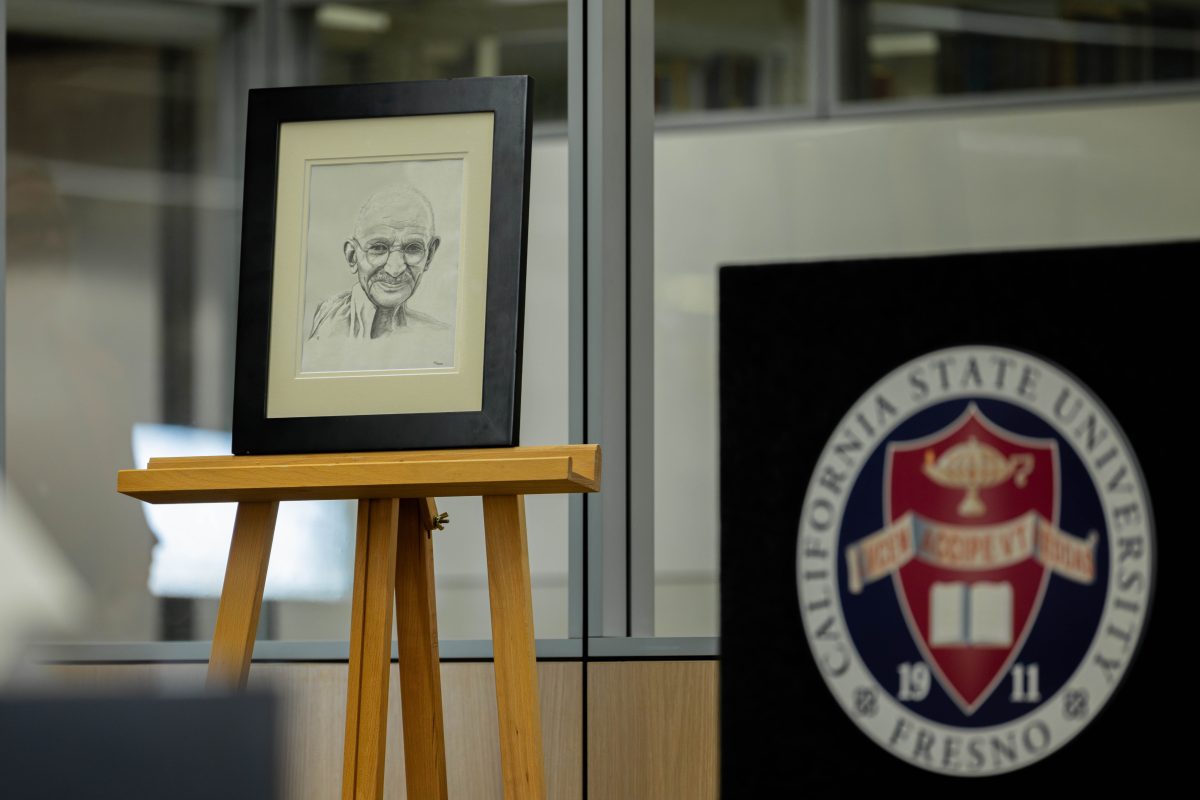
Fresno State opened the Gandhi Study Room in Room 3109 on the third floor of the Fresno State Library on Oct. 18, 2023, and opened for public use in the late Fall 2025 semester.
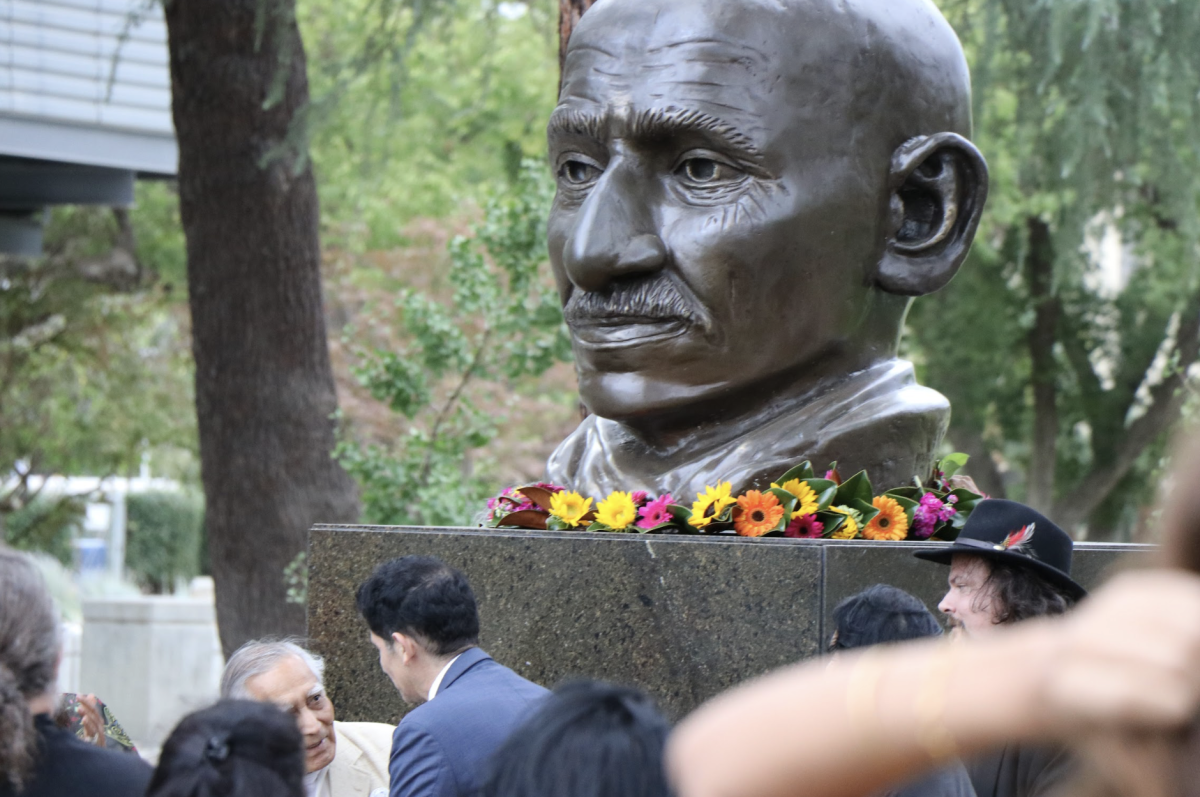
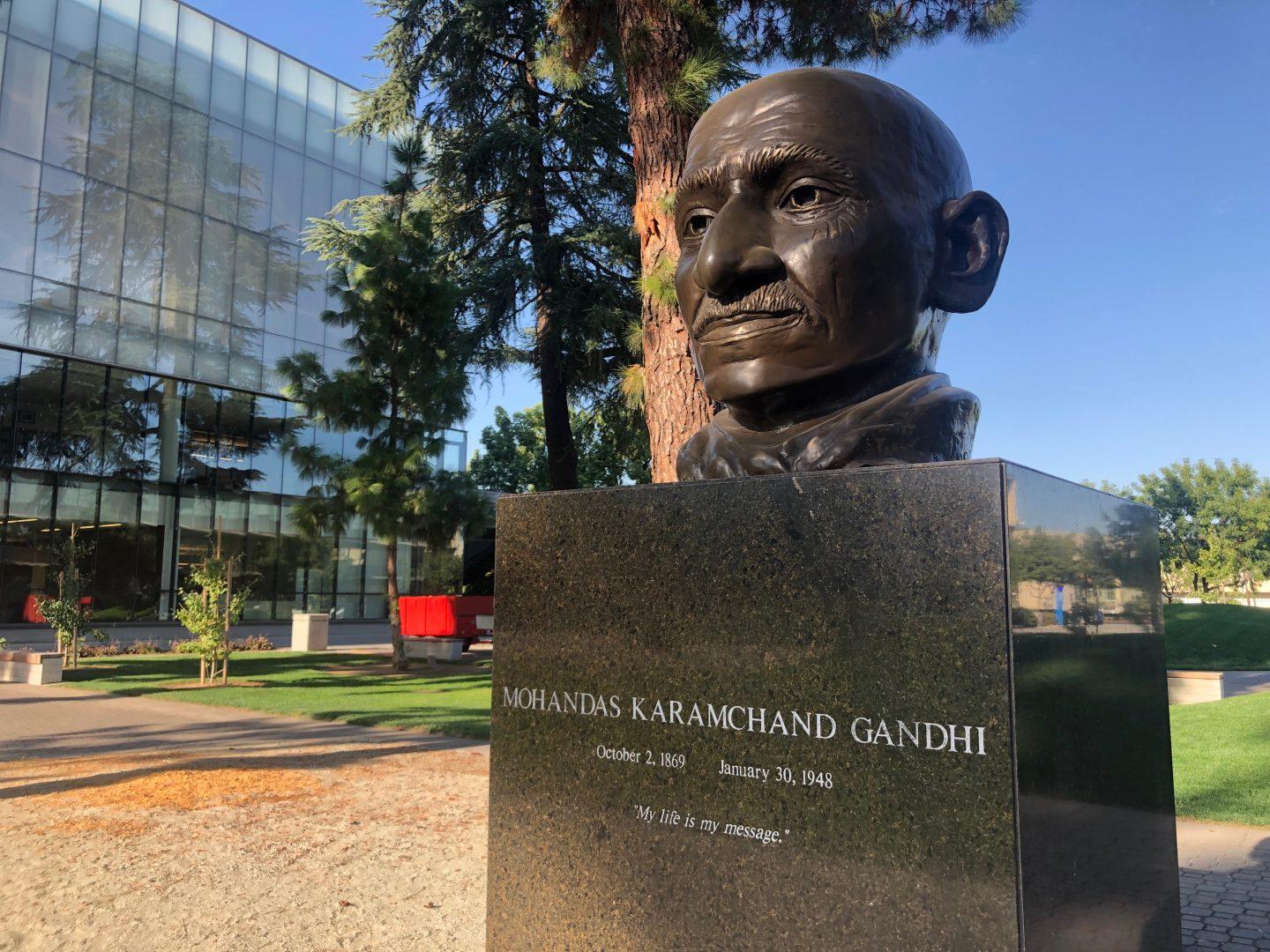
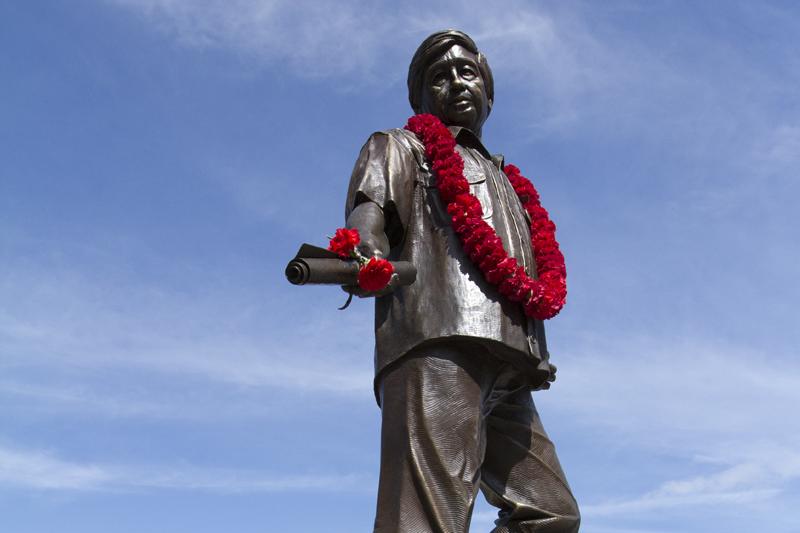
The space was created to honor Mohandas Karamchand (Mahatma) Gandhi and to promote his philosophical teachings about nonviolence and peace. Alongside the study room, Gandhi is also commemorated on campus through a statue in the peace garden, further reinforcing his presence as a symbol of moral leadership.
However, the creation of these spaces has caused discomfort among the Sikh community at Fresno State.
As a Sikh student on this campus, that discomfort is personal and deserves to be acknowledged.
The study room has framed photos of Gandhi and books on his teachings, highlighting his political work in India. The goal was to create an educational space that encourages tranquility for all.
But for some Sikh students, the space feels exclusionary rather than peaceful.
“Gandhi isn’t a person we associate with peace or justice,” said Iqbal Sidhu, Fresno State Nursing Club president. “He is portrayed correctly as a historical figure, but he is not a perfect one because I [as a Sikh] firmly believe he did not thoroughly understand Sikhism or represent us accurately during the times he was active in the fight for independence. If anything, he hurt us more than helped us.”
Clearly, Gandhi’s presence weighs heavily on Sikh students, which raises an important question: why is he such a controversial figure within the Sikh community?
For many Sikhs, Gandhi is controversial because of his personal beliefs, actions and political decisions. While he is often seen as a symbol of nonviolence, Gandhi supported social hierarchies that were deeply harmful.
He did not fully reject the Hindu caste system, which enforced rigid social divisions. Along with that, Gandhi was known to historically target lower-caste communities.
That reality alone makes it difficult to accept him as a universal symbol of quality.
He also believed in a “civilizational hierarchy,” which is where races were ranked based on perceived moral and cultural worth. In this hierarchy, Gandhi placed Europeans at the top and Africans at the bottom. For me personally, this belief makes it impossible to see him as someone who was the symbol of nonviolence.
These beliefs are difficult to separate from the way he is celebrated on this campus, yet they are rarely acknowledged alongside his praise.
During his time in South Africa, he made several statements portraying Black Africans as inferior and argued that Indians should not align their struggle for freedom with African liberation. Instead, Gandhi was seeking approval from white colonial powers.
This is not the kind of leadership I believe should be honored without full context. Honoring a historical figure means reckoning with their full history, not selectively celebrating what fits a convenient narrative.
Beyond his political views, Gandhi’s personal conduct has also raised serious concerns. Despite taking a vow of celibacy, he participated in what he called “moral experiments.” These experiments involved sleeping naked next to young women, including his grandnieces. He claimed this was a way to test his self-control.
Many historians and critics argue that these actions reflect an abuse of power that was justified through religion.
Due to Gandhi’s beliefs and behaviors, it makes it very difficult for many Sikh students to view him as a universal symbol of peace.
The lack of acknowledgment is what makes the Gandhi Study Room unsettling for some students. By portraying Gandhi solely as a symbol of peace and moral leadership, the space presents a version of history that clearly overlooks the lived experiences of Sikh students who see him very differently.
“It’s meant to be a welcoming study space,” Sidhu said. “But when your history is clearly being ignored, it doesn’t feel like a space I want to be in.”
Other Sikh students have raised concerns about how the room was approved in the first place and whether the Sikh community was even consulted during the process.
“It felt like a decision made without the Sikh community in mind,” said Kanver Dhillon, a junior majoring in nursing. “Seeing the Gandhi [Study] Room feels like a waste of space. I think it could be used to commemorate a real hero, not someone who is viewed as a false positive figure.”
Fresno State prides itself on being a diverse and inclusive campus. But inclusion means more than just celebrating well-known historical figures. It means asking who is really being represented and who is being overlooked.
True inclusion requires uncomfortable conversations, not symbolic gestures.
When spaces like the Gandhi Study Room and statue are created without acknowledging Gandhi’s actions, it sends a message. That message shows whose experiences are respected and whose are dismissed.
This is not about erasing Gandhi from academic discussion. It is about questioning why he is being honored in a way that feels irresponsible.
If the goal of the Gandhi Study Room is to promote peace and reflection, that mission should begin with listening to Sikh students and acknowledging the complexity of the dark history being represented.
Peace cannot exist without accountability.
For some Sikh students, these spaces are not just places for study or reflection. They are a reminder that our perspectives are often left out of conversations about history and representation.
This conversation has become even more relevant in light of recent actions taken by Fresno State. On March 20, 2026, the university removed the Caesar Chavez statue following serious concerns about his legacy. That decision shows that the university is willing to reevaluate who it chooses to honor on campus.
It also raises the question of whether the same level of scrutiny should be applied consistently.
The Gandhi Room and the Gandhi statue should not be exempt from that discussion.
I am calling on Fresno State to take that next step, to listen to Sikh students, acknowledge the full history being represented and seriously consider removing the Gandhi Room and Gandhi statue from campus. At minimum, the university should engage with Sikh students, acknowledge the full historical context and reconsider how Gandhi is represented on campus.
Inclusion is not about who we choose to celebrate when it’s easy. It is about how we respond when students speak up and ask to be heard.
Fresno State has already shown that change is possible. The next step is ensuring that change is applied thoughtfully and consistently.







Gabrielle • Apr 13, 2026 at 12:26 pm
Again, Americans doing American things. Cherry picking what fits their agenda and not doing their due diligence on actual historical facts.
Dwayne • Apr 8, 2026 at 2:25 pm
IMHO – and NOT talked about the subject matter – this article is not very well written. It kind of rambles on and jumps around and leaves the reader confused on several points.
If I was grading this as a paper I would give it a C – or at least turn it back to the student and have them clean it up.
Kaur • Apr 7, 2026 at 9:33 pm
As someone from the Sikh community, this honestly meant a lot to read. It’s not something you really see talked about openly on campus, so seeing it actually put into words like this felt important. A lot of us have had these thoughts, but they don’t always get acknowledged.
What I liked most was how real it felt. It didn’t come off as forced or overly aggressive, it just explained why this matters in a way people can actually understand. It’s the kind of piece that makes you stop and think instead of just scrolling past it.
Really glad this got published. Conversations like this don’t happen unless someone is willing to speak up, and this definitely did that.