


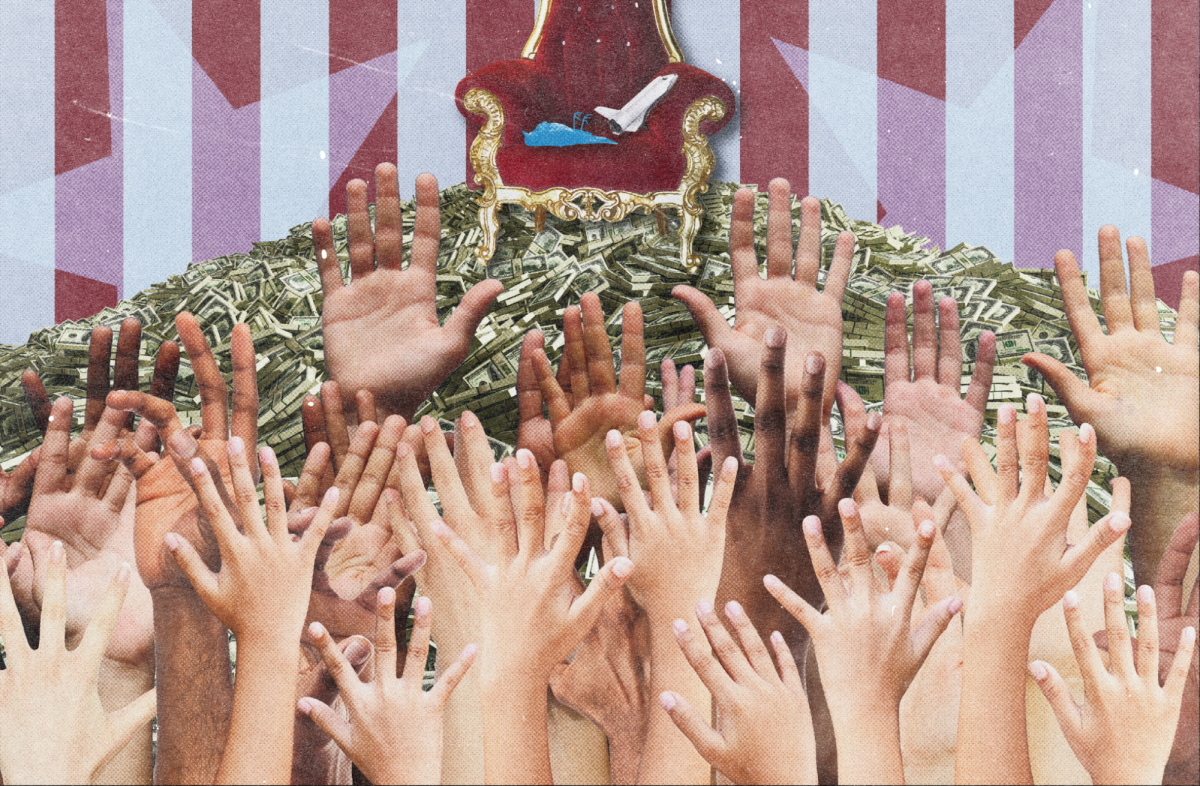
Billionaires shouldn’t exist – not because success is “bad,” but because no society that allows a few people to collect unimaginable wealth while millions struggle can ever call itself fair or healthy.
To put all of this into perspective, according to an article by Medium, one million seconds equals approximately 11.5 days, while one billion seconds is nearly 31.7 years.
Stacking one million dollar bills on top of each other would reach around 358 feet tall, about the size of a 30-story skyscraper. Stacking one billion dollar bills on top of each other would reach 67.9 miles into the sky, which is above the distance that planes fly.
If you made $50,000 a year, you’d need 20,000 years to earn $1 billion. This means a billionaire has more money than 20,000 people working full-time for a whole year.
A billionaire spending $1,000 a day would require nearly 2,740 years to run out of money.
When one person can own more than entire communities combined, something in the system is deeply broken. Extreme wealth isn’t just a personal fortune; it becomes a source of political power, economic control and social imbalance.
If we want a future where everyone has a real chance to live well, we have to question whether anyone should be allowed to accumulate a billion dollars in the first place.
The Resnicks are California’s richest farming company and a clear example on why billionaires shouldn’t exist. A single wealthy couple controls huge stretches of farmland, nearly all water resources and entire local economies (Wonderful pistachios, POM pomegranate juice, Halo mandarins, Fiji bottled water and the Telefora flower delivery service) while the communities around them struggle with poverty, drought and underfunded public services.
When so much power over a region’s land, jobs and even water is concentrated in the hands of just a few, everyday people lose control over the resources their lives depend on.
No one should have the ability to shape an entire region’s future simply because they have enough money to buy it ($13 billion to be exact).
When a small group of people controls massive amounts of money, they gain the power to shape politics in ways most people can’t. They can donate huge sums to political campaigns, hire people to push for laws that protect their wealth or even own media companies that influence public opinion.
Regular citizens don’t have access to that kind of influence, so their voices get drowned out. Democracy is supposed to be a system where every person is equally represented, but extreme wealth distorts that balance.
Along with that, many fortunes come from paying workers below the value they produce. A billionaire’s wealth is only possible because thousands or millions of others receive less than a fair share.
Wages haven’t kept up with the cost of housing, healthcare or education, but corporate profits keep reaching new heights. The system also includes tax rules that let the rich avoid paying their fair share, while everyday workers pay full taxes out of every paycheck.
In other words, the economy is designed to funnel money upward, helping billionaires accumulate even more while regular people work harder just to stay afloat. A truly healthy economy would lift everyone, not just the people at the very top.
When the gap between the rich and everyone else is this big, society becomes less stable. People have worse health, fewer opportunities and more stress, and the economy slows down because most people don’t have enough money to spend.
Billionaires donate money, but that gives them control over which problems get attention. Important decisions about society shouldn’t depend on the personal choices of a few rich people.
If the richest people paid higher taxes or if there were caps on wealth, that money could go toward necessities like healthcare, education or infrastructure, things that benefit the whole population.
Some people argue that billionaires are necessary because they drive innovation and create companies that provide jobs and economic growth.
While billionaires may contribute to innovation, innovation doesn’t require extreme wealth; scientists, universities and worker-owned companies create breakthroughs without anyone becoming a billionaire.
Most billionaire fortunes depend on underpaying workers, so the idea that their wealth is purely “earned” ignores the system that enables it.
If we truly believe in fairness, opportunity and democracy, then we have to admit that a society built to create billionaires is a society built to fail most of its people.
No one becomes a billionaire without a system that underpays workers, rewards exploitation and prioritizes profit over basic human dignity.
We’ve normalized the idea that a tiny handful of people should hold more wealth and power than entire nations, and we treat it like an unavoidable fact of life. It isn’t. Extreme wealth is a policy choice, one we can choose to undo.
If we want a fair economy and a real democracy, we can’t keep pretending that billionaires are harmless or symbols of success. They are products of a broken system, and fixing that system starts with refusing to accept extreme wealth as normal or necessary.








Gregg • Feb 6, 2026 at 10:50 am
Jealous much