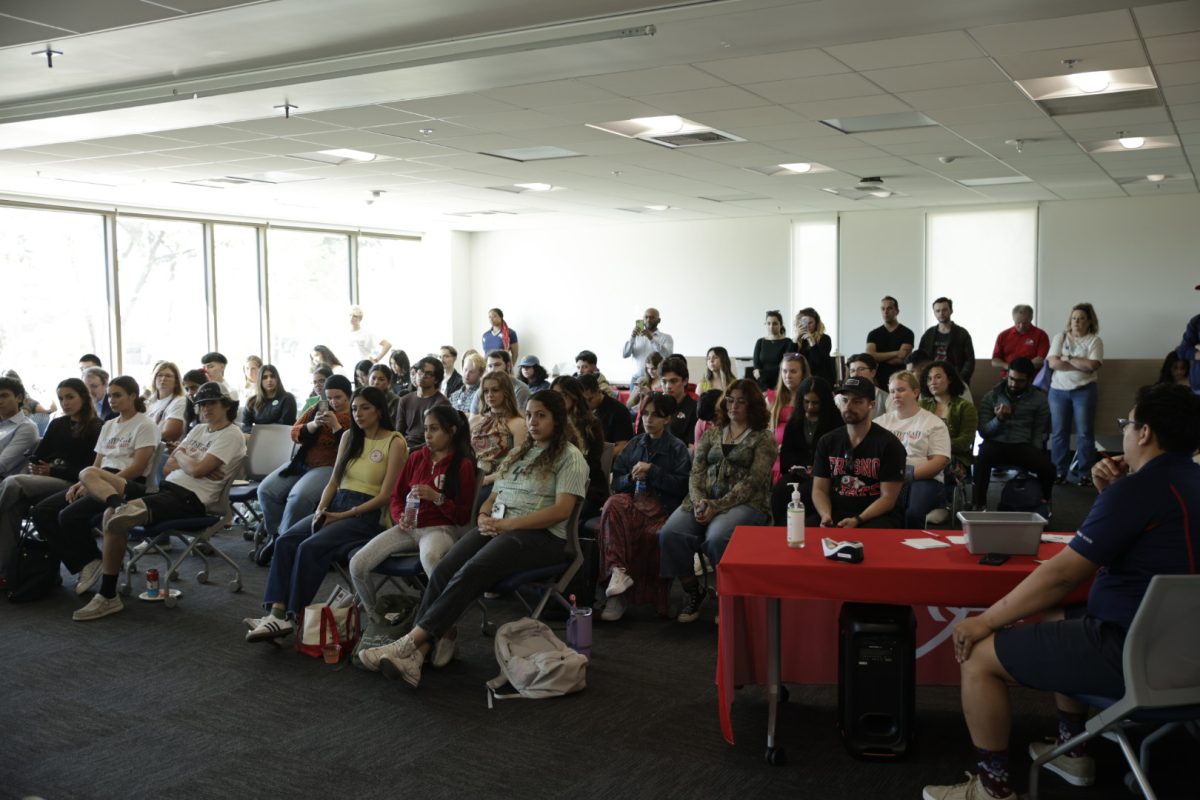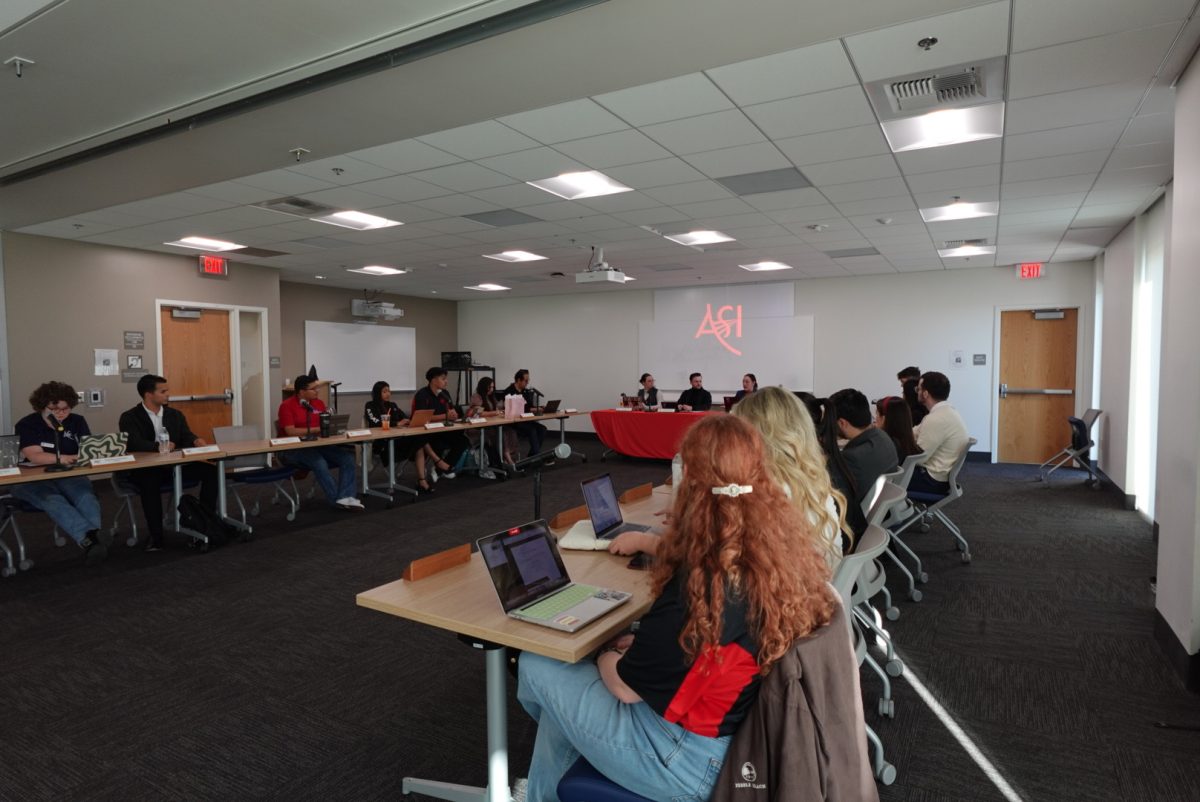

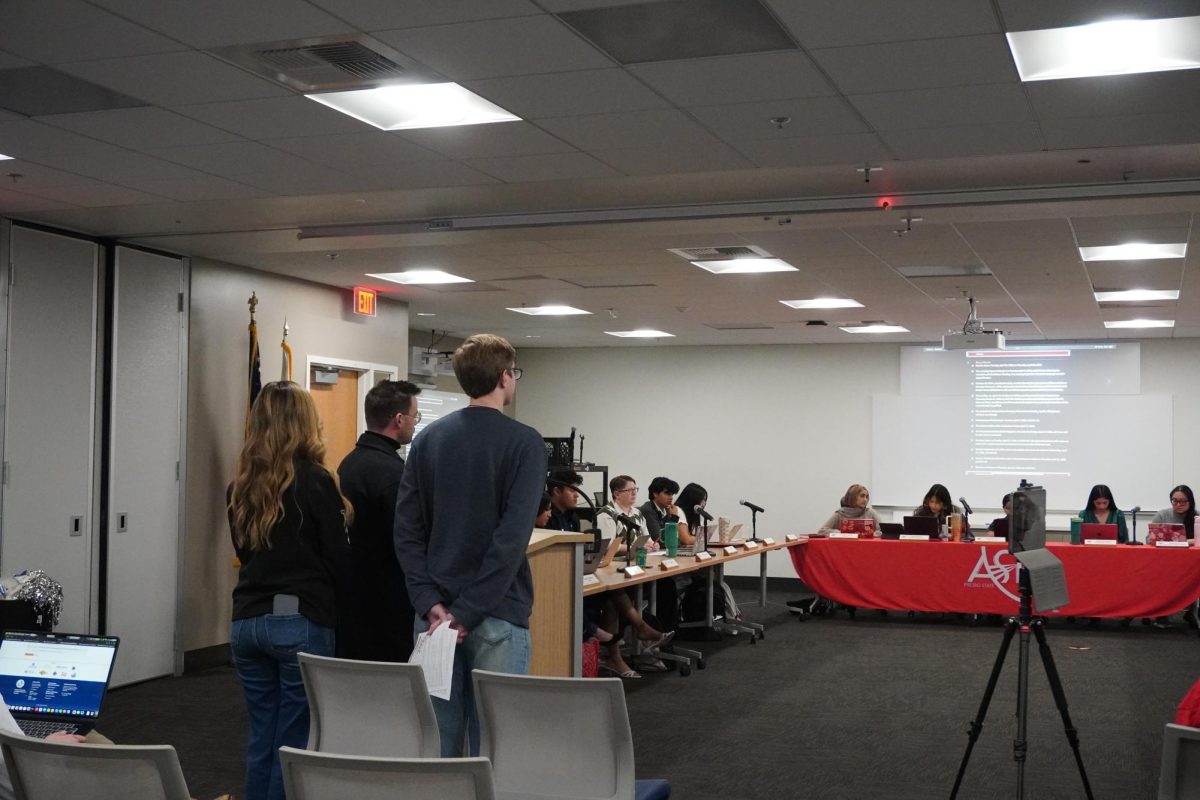
At their last meeting of the semester, Associated Students, Inc. (ASI) addressed a major topic of discussion at Fresno State: course availability, or the lack thereof.
The senate heard a presentation from George Still, associate vice president of the Office of Institutional Effectiveness, who broke down some data regarding course availability and answered questions from senators.
Before he got to the meat of the data, Still provided some background. Out of a sample size of 8,000 undergraduate students, the study received 867 responses. Out of these resondees:
- 39.2% had caregiving responsibilities.
- 40.8% did not have caregiving responsibilities.
- 19.7% worked full-time jobs.
- 42.6% worked part-time jobs.
When it came to building their desired/necessary class schedules, just 4.6% of students said it was very easy, 27.8% it was somewhat easy and 40.6% were not able to construct full schedules at all.
“We know that there is an opportunity gap around students getting to that 15 unit threshold to the tune of about 10%,” Still said.
He said that, according to the results, the three main factors that make registration so difficult are classes filling up too quickly, schedule conflicts and a lack of online class availability.
Senator of the College of Arts and Humanities Sarah Sevy brought up the struggling course sections of the School of Music, where some students cannot take a certain prerequisite course because another section of the class is not being offered.
Muscat said she will be working with the CAH’s dean, Honora Chapman, to bring these issues forward.
“I’m working specifically on student matters, whether it’s advising, access issues, academic supports, mental health supports,” Muscat said.
She encouraged students to reach out to her directly for specific answers and calls to attention.
Senator of the Craig School of Business Kirsten Martinez also shared similar woes. After talking to a few students, Martinez found that Dog Days was not helpful for them; they received “terrible classes” and had not had positive experiences with their academic advisers.
“I personally helped them register for classes, and I was only able to get them into two classes,” Martinez said. “One of them was not able to get into IS52, which is an essential class for business students.”
Martinez asked Still and Muscat if there is a way to make prerequisite classes corequisite to alleviate some of the pressure. They said that they are looking into the issue and want to make sure each student gets into the classes they need.
Muscat said that, from the university’s perspective, there are some challenges when it comes to opening new course sections. She said that just because there is a demand for a class doesn’t necessarily mean people will enroll in it once it opens.
“It’s hard to predict what all of you will take, despite the fact that I see a lot of students on wait lists for a particular area,” Muscat said.
Still said the university has also hired more professors to teach the classes in demand, despite budgetary constraints.
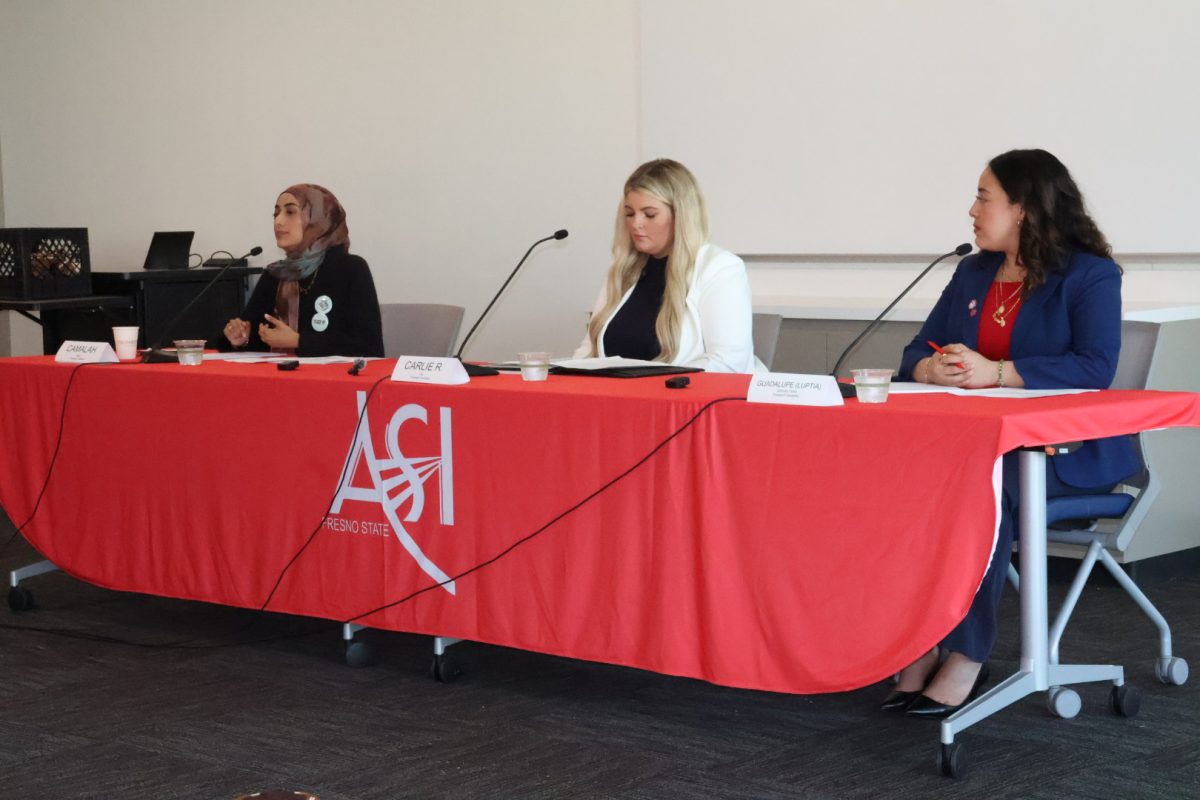
Later in the meeting, ASI President Camalah Saleh presented a course availability resolution. In it, she made some key points:
- The lack of online courses creates barriers for students who work, are caregivers, commute and have other external obligations.
- The university should ensure that all students have the opportunity to enroll in 15 units per semester. This means adding 250 new sections to meet demand.
- Departments should schedule a large number of classes between 9 a.m. and 3 p.m., per student preference.
- The university should invest in better online course infrastructure as well as additional instructional space.
The resolution passed unanimously.
Tech stats and funding
On a separate note, Alexander Durant, the head of Fresno State’s Tech Lending, gave a presentation about the services they offer.
Located in the library, Tech Lending, on average, checks out 900 laptops per year and receives about 1,900 online requests.
“There’s around 700 requests per year that we’re just not able to complete because we don’t have the items,” Durant said.
He said tech lending hopes to work with ASI to resolve their supply limitations.
Then, Senator of Research and Innovations Parker Hill requested $21,000 in total to fund the program, new computers and new calculators. The motion passed unanimously.
Non-resident tuition
Cody Jarvis, an external affairs committee member, presented a resolution declaring that, in the future, the California State University (CSU) system should only increase fees for international and out-of-state students gradually and in a predictable manner.
He pointed to the current non-resident fees, which are $444 per unit, a 12% increase in the last two years.
“If we keep on raising our non-resident tuition fees for our international students, how are they supposed to afford an education?” Jarvis said.
He pointed to non-resident fees at other nearby community colleges, which are roughly $90 less than what the CSU charges.
Jarvis also pointed to the challenges that international and undocumented students face.
“We have the responsibility to protect these students by being advocates for good public policy,” Jarvis said.
He urged ASI to advocate for affordability to the CSU Board of Trustees, the chancellor’s office and the Legislature.
This resolution also passed unanimously.
Elections timeline
ASI Operations Manager Frederick Lisitsa, along with election commissioners Melissa Jauregui and James Swanson, then presented the timeline for the Spring 2026 ASI elections.
It is as follows:
- Candidate petitions will be available in the ASI office on Feb. 2, and will be due on March 26 at 5 p.m.
- The deadline to verify petitions is April 1.
- The all-candidates meeting is on April 6.
- Campaign season will begin on April 7.
- Campus-wide emails will be sent announcing more dates, times and election booth locations on April 9.
- The presidential debate will take place on April 17.
- Ballots will be finalized on April 17.
- Voting will begin on April 21 at 9 a.m.
- Voting will end on April 23 at 12 p.m.
- Election results will be announced on April 23 at 1:45 p.m.
- April 30 is the deadline to request a voting recount.
- Voting results will be made final on May 8.
- The new ASI president will be officially installed on June 1.
Lisitsa also went over some changes when it comes to campaign and election rules. For instance, ASI representatives are no longer allowed to endorse a candidate or table at a candidate’s booth.
“One of the rationales that I had with imposing these rules was simply the tumultuous nature of our last election cycle,” Lisitsa said.
To close the meeting, each executive, senator and staff member gave reports. Notably, ASI Executive Vice President Maris Prado said that, come January, there will be umbrellas dispersed around campus for students to use so they don’t have to get wet in the rain.
Once each member wrapped up, the meeting adjourned.
ASI meets every other Wednesday in the Resnick Student Union Room 207. Meetings are livestreamed and open to the public.