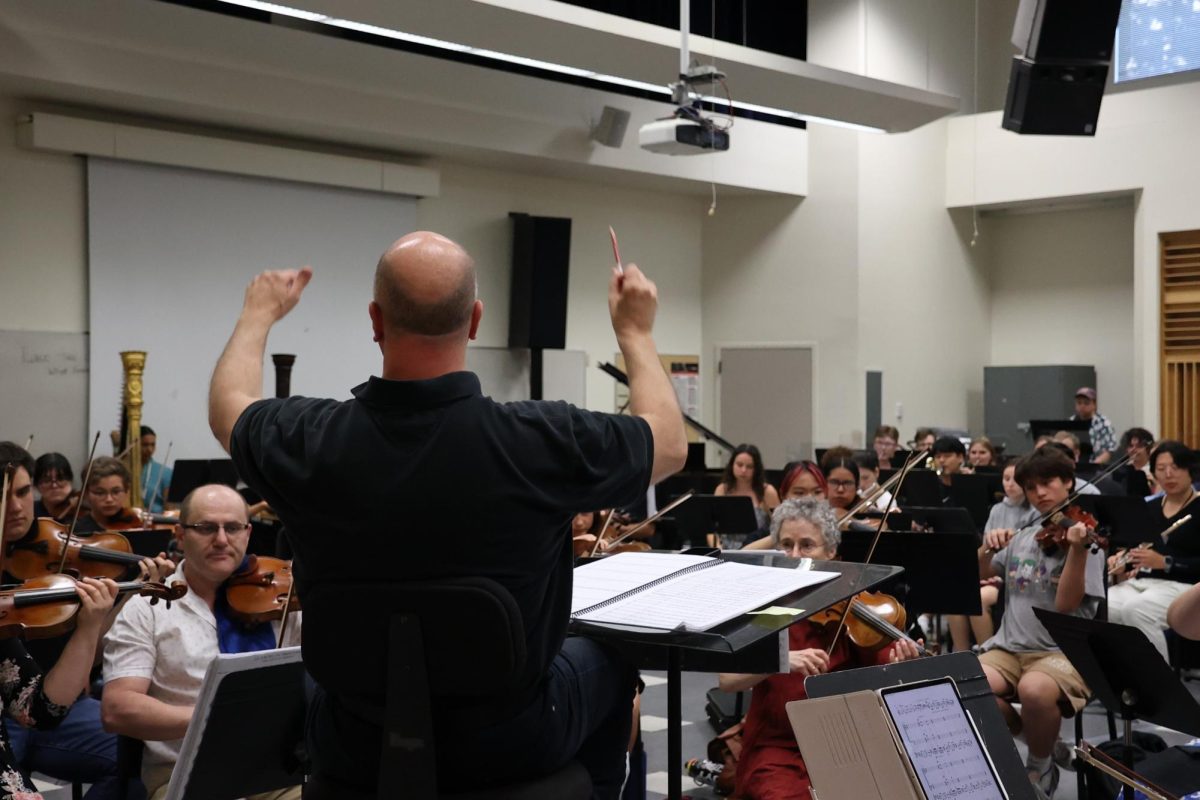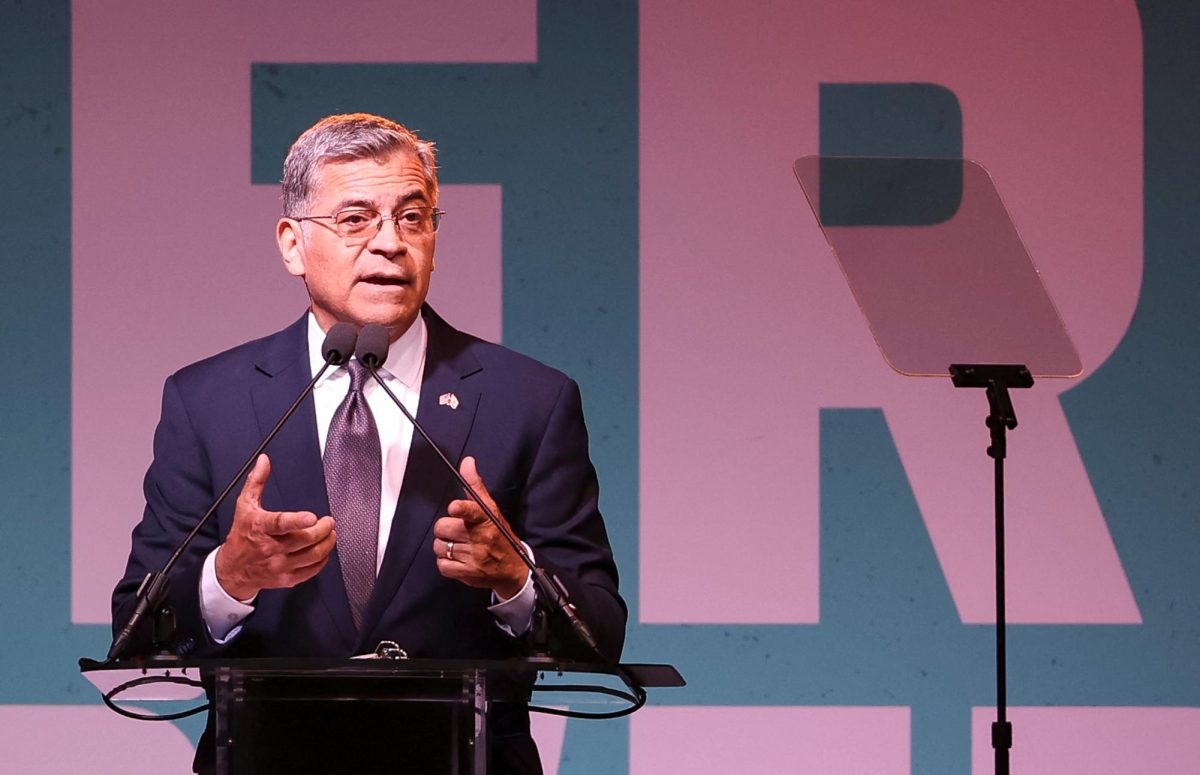

Fresno State’s Political Science Department provided a teach-in that focused on rising electoral violence in the United States and around the world.
“We are seeing an increase in electoral violence in the United States,” said Lisa Bryant, the program’s department chair. “We tend to think of it as not occurring very often here, and certainly, if we look at a global perspective, electoral violence is pretty commonplace throughout the world.”
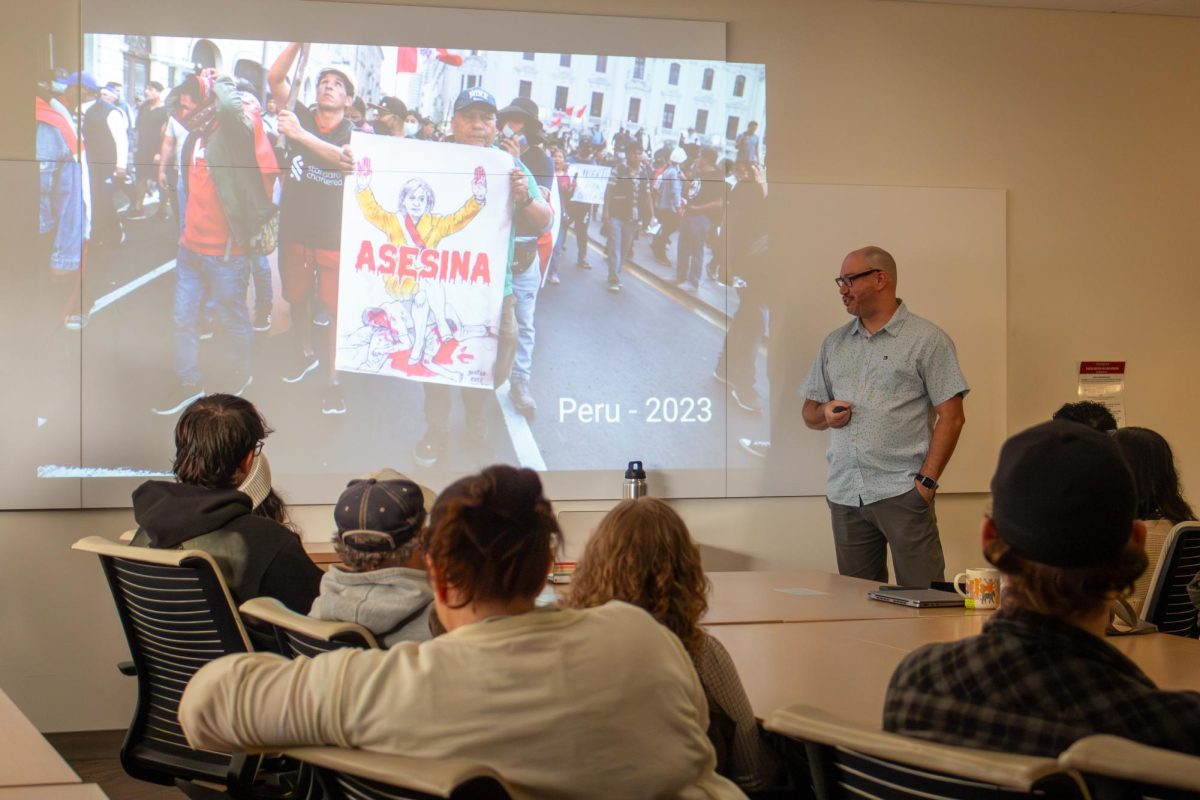
The “Electoral Violence” teach-in took place from 10-11:30 a.m. in Fresno State Library Room 2108. It was presented by Bryant and Everett Vieira, associate professor of political science.
“It was really interesting, it made me question a lot about what is happening in our country,” said Jazmin Fonseca, a sophomore pre-health major.
The event started off with Bryant and Vieira defining electoral violence as political violence that takes place during election cycles. They said it is directed against elected officials or voters in order to discourage or influence election outcomes.
Bryant then provided historical examples of electoral violence in the United States. Rev. George Lee, for example, tried registering Black Americans to vote in Mississippi during the Civil Rights era. Lee was soon found murdered.
The Central Valley has its own history of electoral violence, they explained. Farm owners in rural communities would meet at voting locations and threaten their farmworkers not to vote if they wanted to remain employed.
This practice continued up until the early 2000s, according to Bryant.
Other instances of electoral violence in American history include the 1834 Whigs vs. Democrats riots, the 1857 Know Nothing riots and the 1873 Colfax Massacre, which is the deadliest instance of electoral violence in American history.
The history discussion then moved on to recent events of electoral violence. Bryant includes examples such as the Jan. 6 insurrection and Solomon Peña, a failed GOP candidate who tried to orchestrate shootings at the homes of elected Democratic candidates in 2022.
Bryant also touched on the fact that there was a rise in lynchings in the South during the 2020 presidential election.
Vieira then began his presentation on examples of electoral violence around the world. Vieira’s presentation gave the audience an idea of how electoral violence looks in the modern context.
“Things are kind of getting unsafe these days, so where are we headed?” Vieira said. “Let’s look to the rest of the world, what does electoral violence look like?”
Vieira touched on Mexico’s 2024 general election, which was the deadliest election cycle globally. Vieira also mentioned Alexei Navalny, a Russian opposition leader who openly criticized Russian President Vladimir Putin. She was soon found dead after being imprisoned in Siberia.
Vieira provided an interactive map from Freedom House, an American organization that monitors democracy and human rights around the world.
Vieira said that rampant electoral violence goes hand-in-hand with countries experiencing weak democratic institutions.
“In states where there are high levels of electoral violence, democracy is not thriving,” Vieira said. “Democracy does not exist in some of these states.”
Bryant encouraged students to exercise their right to vote, as there are minimal risks of experiencing electoral violence as a voter. Bryant mentioned various other methods for students who are worried about experiencing electoral violence, such as early voting and mail-in voting.
“Don’t let it stop you from participating,” Bryant said. “Use alternative methods of casting your ballot by voting early or voting by mail.”
The next teach-in, titled “Crimmigration: Policing Language, Color, and Labor,” will take place on Nov. 6 from 12-2 p.m. The teach-in will be presented by Annabella Espana-Najera and Alina Mendez of the Department of Chicano and Latin American Studies.