

The California State Senate Judiciary Committee voted to progress AB 1267, a bill that will ban child marriage in the state, 12-0.
Hitting the 10th hour of its meeting, Thomas J. Umberg, senator and chair of the Senate’s Judiciary Committee, introduced Gail Pellerin to discuss AB 1267, which will set a minimum age of 18 for marriage in California.
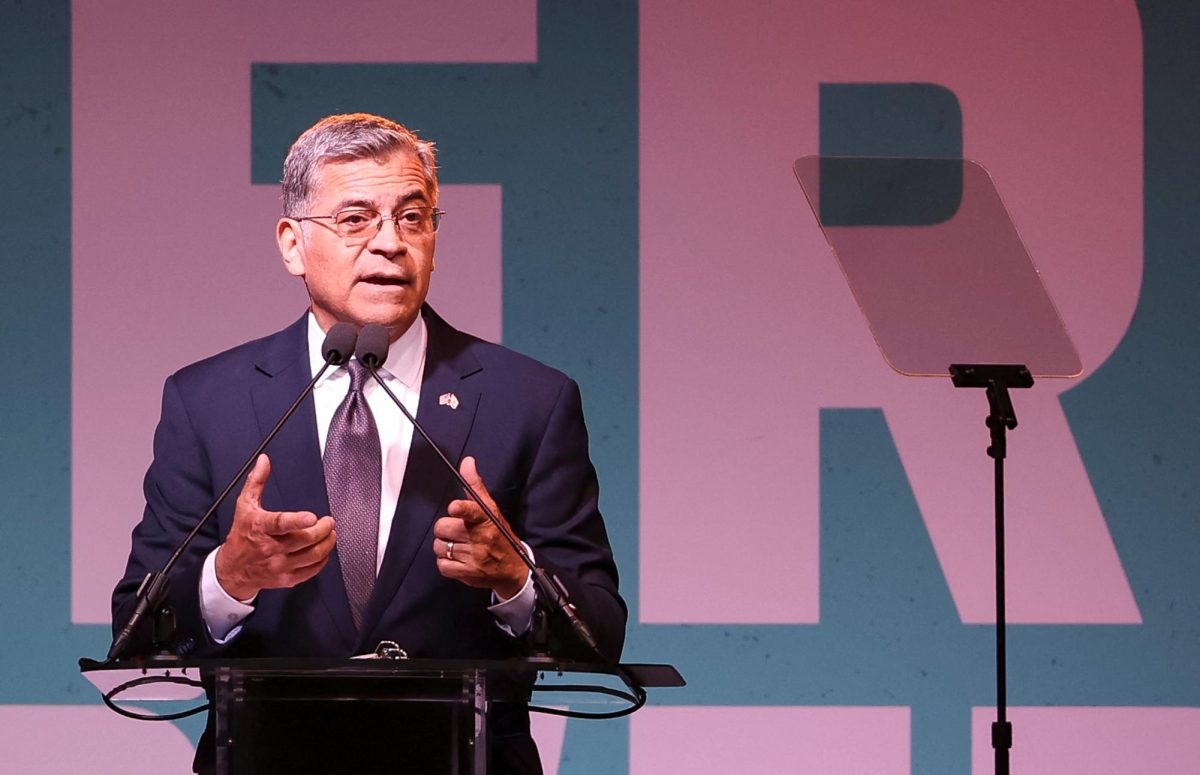
Pellerin discussed her reasons for support and called up co-author Cottie Petrie–Norris, who shared her long journey in getting child marriage banned.
“The human rights commission considers marriage under the age of 18 to be a human rights abuse,” Petrie-Norris said. “It’s long past time that we end that abuse here in California.”
In California, minors can get married with parental consent from at least one parent or guardian and an order from a judge.
Darcy Totten, executive director at the California Commission on the Status of Women and Girls and co-sponsor of the bill, opens as one of the primary witnesses in support of the bill.
“We want to start at the heart of the issues, which is that this is not a bill about teenagers having sex or babies or pregnancy; it’s not even about preserving their bodily autonomy, as some opposition has suggested,” Totten said. “It’s about marriage and their ability to enter a really broad legal contract.”
Totten added that child marriage has been used as a mechanism for adults to evade accountability for “statutory rape, domestic violence, human trafficking and other gender-based violence.”
She said that data demonstrates that the average age difference between a 15-year-old mother and the father of the child was about four to six years. Whereas, for mothers under 15, the studies report that the average father’s age is around 22.
“What we’re looking at here is that what marriage does do, in most of these cases, is change the status of the adult male involved from rapist to husband,” Totten said.
Christina Sutton, a survivor of child marriage and resident of San Francisco, shared a testimony to the Judicial Committee.
“Adults don’t always act out of love, and parents don’t always act in a child’s best interest,” said Sutton. “AB 2167 would have protected me. I was 16 when a nearly 22-year-old man began a sexual relationship with me within hours of meeting me. The legal term for that is statutory rape.”
She shared that her parents supported the 22-year-old man despite knowing she didn’t want to date him. She was later forced to marry him at 17.
“To this day, I wish I had just a few more months to turn 18 and legally remove myself from both situations,” Sutton said.
“I remember sitting in a judge’s chambers in Napa and being asked point blank, ‘Are you being forced to do this?’” Sutton said. “Like most abused children, I chose lying to a judge over risking escalation at home. I repeated exactly what my parents coached me to say: ‘I am very mature for my age…I am choosing this.’”
Roughly five attendees of the meeting expressed support for the bill. Whereas no one shared any opposition to the bill.
State Senator Aisha Wahab (D-Hayward) said that four years ago, this bill was brought by her to the Legislature. She shared a conversation she had with a committee consultant in which she told them she wanted to ban marriages under the age of 18.
“They said, ‘Oh, that happens a lot in your culture’…. I want to highlight that this actually affects a lot of different communities of a lot of different religious groups through the state of California, let alone this nation, and worldwide,” Wahab said.
“There are lots of religious and conservative families that believe two wrongs don’t make a right; they want to correct the mistake,” Wahab said. “This [AB 2167] is a very common-sense measure.”
State Senator Akilah Weber Pierson (D-La Mesa) said she is unsure about this bill, to an extent.
“I think, for me, one of the challenges that I’ve had in this conversation is that we do grant the ability for certain ages under 18 to make very significant decisions, and so I find it interesting that at 17, I can have a child, but I cannot willingly marry the father of that child. Even if he is 17 as well,” Persion said.
After hearing from the public and Senate, Umberg asked Pellerin for any last comments.
“This is one of those rare votes that future generations will look back and wonder why it ever took us so long,” Pellerin said. “Today, you could take a very important step, a step toward California finally saying children belong in schools and at home, not in marriages.”
Wahab moved the bill and the Judicial Committee committed the vote, which passed 8-0. Next, the bill will be heard by the Senate Appropriations Committee for a fiscal review.