

On April 24, 1915, the Ottoman Empire began a genocide of the Armenian people that persisted until 1923, first by murdering Armenian intellectuals and prominent community figures.
In the end, approximately 1.5 million Armenian men, women and children were murdered, and even more were displaced.
This year will mark the 110th anniversary of the Armenian Genocide.
The commemoration
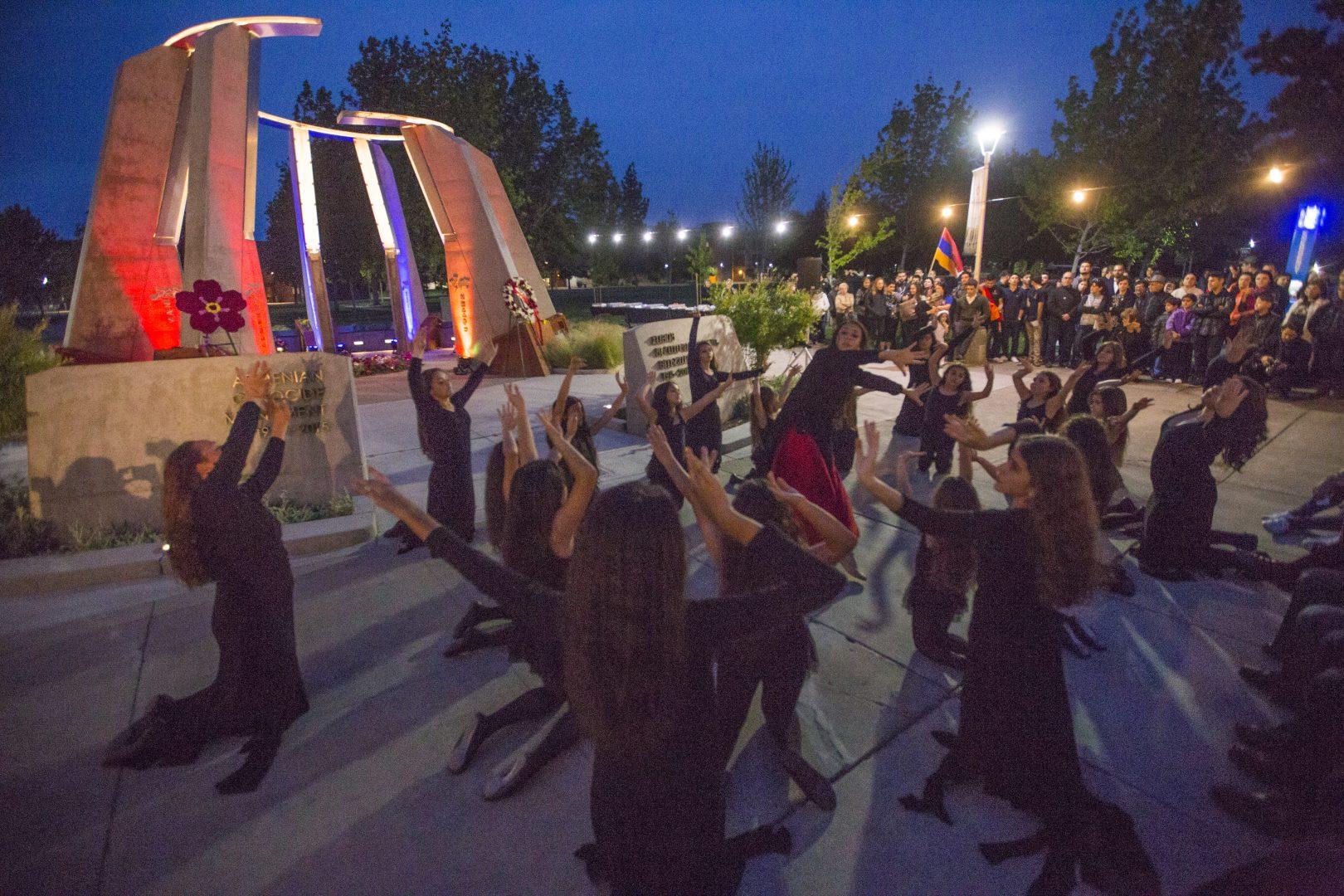
On the morning of the 24th, the Armenian Students Organization (ASO) at Fresno State will hold a silent march followed by a memorial at the Armenian Genocide monument on campus.
Then, in the evening, another memorial will take place at the monument, which typically brings in thousands of people from the general Fresno population. Attendees can expect speakers, prayer and music.
Mary Papazian will be the keynote speaker, according to the press release.
The morning march begins at 11:30 and the evening memorial begins at 6.
Additionally, on April 25, the ASO will hold a film screening in partnership with CineCulture. The film will be “My Sweet Land” in the Student Recreation Center building at 5:30 p.m.
The past and present
Harutyun Amirkhanyan, the president of ASO, came up with the slogan “bound by blood, united by cause” in honor of the week of April 24. He spoke about the significance of the day.
“This [was] probably the biggest event that resulted in a massacre of 1.5 million people, but recently, in just 2020, another ethnic cleansing [of Armenians] took place,” Amirkhanyan said. “It’s a continuous atrocity that our nation is being subjected to.”
Amirkhanyan refers to the 44-day war in 2020, when Azerbaijan captured the ancient Armenian land of Nagorno-Karabakh, or Artsakh in Armenian.
Azerbaijan enacted a blockade in Artsakh in 2022 by eliminating the economic connection between Armenia and Artsakh through the Lachin Corridor.
The blockade would persist for ten months, creating a crisis for the Armenians remaining in the region due to a lack of food, water and medical necessities.
In September 2023, approximately 100,000 Armenians fled Artsakh in fear of massacre by Azeri forces.
Today, Artsakh is completely devoid of Armenian people as Azerbaijan continues to destroy Armenian cemeteries, architecture and churches.
Amirkhanyan explained that it is equally important to remember both recent Armenian history and what happened to previous generations.
“Go back to the history, see what happened, see how that affected your family and why you ended up here,” Amirkhanyan said.
Berberian Coordinator of Armenian Studies Barlow Der Mugrdechian also shared the same sentiment, that the Armenian Genocide did not truly end in 1923.
“What happened in 1915 can be seen as part of the same long-term process, that Armenians are still being threatened in places like Armenia and Artsakh even 100 years after the Armenian Genocide,” Der Mugrdechian said. “Nothing was done to punish the perpetrators.”
Turkey denies that the Armenian Genocide occurred, despite hard evidence supporting otherwise.
A 1914 letter from the Ottoman Archives, discovered by Professor Taner Akçam of Clark University, displays a plan for the Armenian Genocide by the Committee of Union and Progress (CUP), the Ottoman political organization largely behind the orchestration of the Genocide.
It reads that the CUP “has decided to annihilate all of Armenians living within Turkey, not to allow a single one to remain, and has given the government broad authority in this regard.”
As previously mentioned, this evidence is disregarded by past and current Turkish officials.
Armenian attempts at self-defense and protest are used to claim Armenians as the offenders in a report titled “The Armenian “Genocide”? Facts & Figures” by the Center for Strategic Research, a Turkish organization.
“There were many honest Western diplomatic and consular representatives who reported what actually was happening, that it was the Armenian revolutionary societies that were doing the revolting and slaughtering and massacring to secure European intervention in their behalf,” the report reads.
Der Mugrdechian discussed that this narrative has contributed to the events seen in Artsakh in recent years.
“[The Turks] didn’t acknowledge it, then others got bold and said, well, we’re just going to do the same thing- and nobody will do anything,” he said. “That’s why it’s important for us to always talk about it.”
Sylvie Khatchikian, the social media executive for ASO, discussed the importance of holding Armenian Genocide commemoration events.
“They provide space for remembrance and allow for education about the history of the genocide,” Khatchikian said. “The memory of the Armenian Genocide is not only a historical event, it is the living memory in preserving our language, culture and history.”
All of the ASO events this week are free admission and do not require an RSVP.
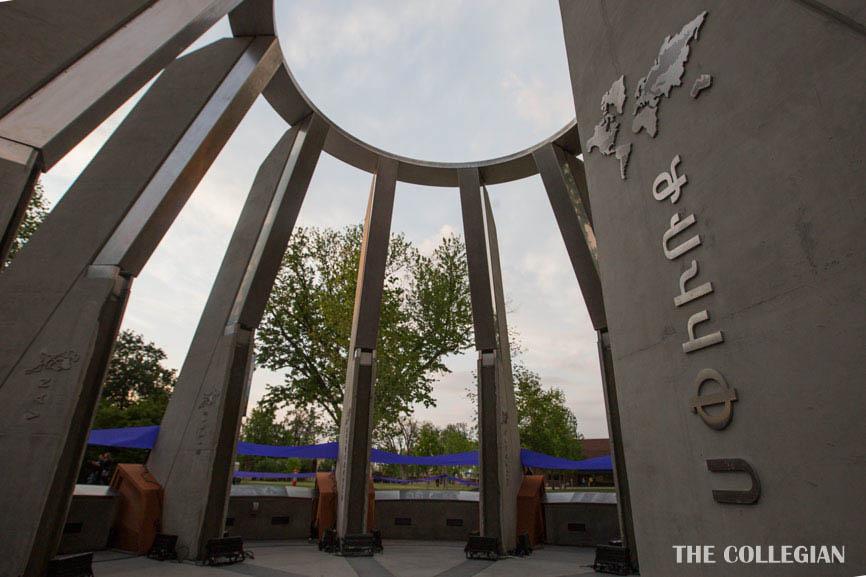
Though April 24, is a designated day of commemoration, the Armenian Genocide monument on campus serves as a daily reminder of the tragedy that was 1915.