
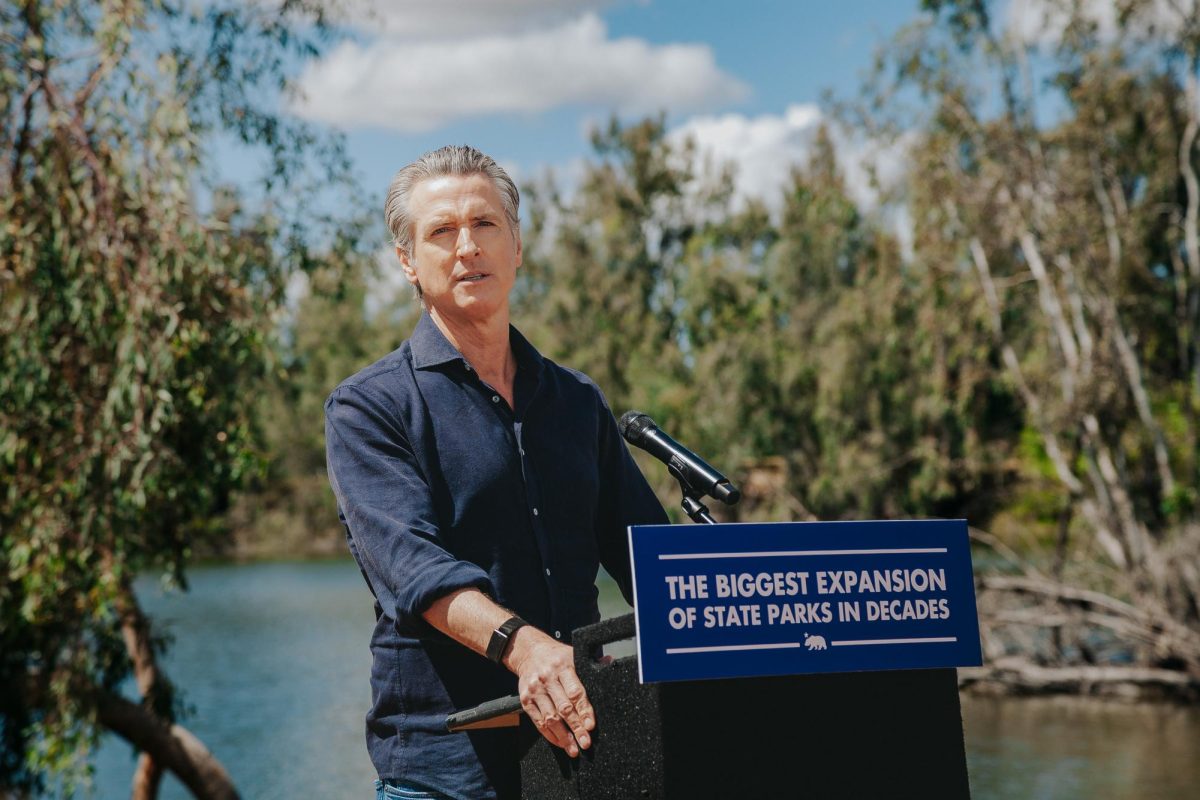
In celebration of Earth Day, Gov. Gavin Newsom announced the addition of three state parks to the Central Valley, pushing the statewide total to 283 parks, while growing existing parks across California by 30,000 acres by the end of the decade.
The press conference was held at 11 a.m. on April 22 at Sycamore Island in Madera. State and environmental executive figures spoke, including First Partner Jennifer Siebel Newsom.
“From day one, the governor and I have made it a priority to ensure that every Californian child has the opportunity to explore Mother Earth’s abundance,” Siebel Newsom said.
This expansion is run through State Parks Forward, the biggest park expansion effort in decades. The Central Valley is often overlooked when considering park locations, and this effort aims to give citizens of the valley new, protected places to recreate and enjoy.
“This is about creating experiences for the people of California, reminding them that they belong here and that this is their world,” said California Department of Parks and Recreation Director Armando Quintero.
The first park, located between Fresno and Madera counties, is the San-Joaquin River Parkway.
Owned by the San-Joaquin River Conservancy, the park consists of 847 acres of five public properties with river access along both sides, allowing for many recreational uses.
“Properties like Sycamore Island, where we’ve gathered today, remind us just how vital open spaces are to the health and well-being of both people and nature,” said Chief Executive Officer of the San-joaquin River Conservancy Kari Daniska.
The second is Feather River Park in Olivehurst, Yuba County. This park opening marks the first state park ever in the county. The park along the Feather River spans nearly 2,000 acres and offers recreational value, as well as floodplains designed to absorb water during high-flow seasons.
The third is Dust Bowl Camp in Bakersfield, Kern County. Consisting of about two acres, it serves as a historic landmark for migrant workers who came to California during the Dust Bowl of the Great Depression. The park aims to give disadvantaged communities a place to learn about vital Californian history.
Although not yet opened to the public, efforts to clean up and restore these parks are on track to finish by 2030 as part of California’s 30×30 plan. This plan is a state effort to preserve 30% of the state’s lands and coastal waters by the end of the decade, which is “well on pace” to be achieved, according to Gov. Newsom.
Additionally, public meetings regarding management, activities, park names and more will be happening in the future, according to Quintero.
For more information on these parks and the expansion effort, visit this link.