

At the end of the last season, I wrote a column about how the inaugural 12-team College Football Playoff (CFP) format was flawed and needed to be changed.
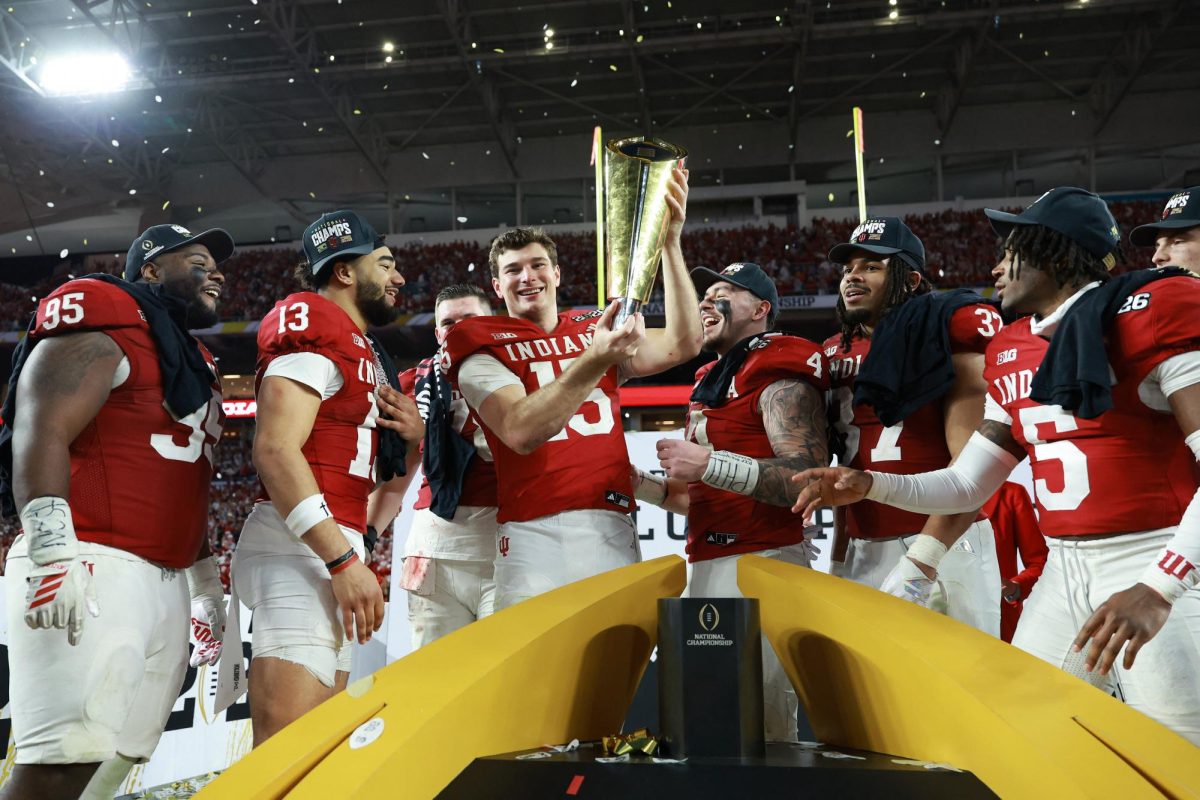
After I witnessed the University of Indiana win its first national championship against the University of Miami on Jan. 19, it’s not the format that needs changing — it’s the entire committee that needs to be removed.
The CFP committee ranks the top 25 teams in college football once the season reaches the first Tuesday of November. The committee says that it ranks teams based on these four criteria: strength of schedule, head-to-head competition, comparative outcomes of common opponents (without incenting margin of victory) and other relevant factors such as unavailability of key players and coaches that may have affected a team’s performance during the season or likely will affect its postseason performance.
It certainly never feels like they follow their own rules.
From baseless rankings for six weeks to inconsistency in the movement of the teams, the CFP committee is going to ruin college football’s future — if the new era of college athletics hasn’t already done that.
That is the entire point of the expanded playoff — to give teams a chance to right their wrongs. However, it’s the inconsistency of these chances that gives fans the sense that it’s essentially random who gets in or not.
Take, for example, the University of Alabama. The Crimson Tide made its conference title game as the No. 9 seed in the CFP rankings, and, for lack of a better term, got walloped. With -3 net rushing yards in a 28-7 loss to the Georgia Bulldogs, the Tide were moved out of the playoff, right?
Wrong. Instead, the Crimson Tide stayed put at No. 9 in the rankings, setting up a date with the University of Oklahoma for a first-round match in the CFP.
So, if a team loses in the conference championship, the committee has established that they wouldn’t drop that team out of their position.
Well, the Brigham Young University Cougars played in the Big 12 title game against the Texas Tech Red Raiders and lost 34-7.
Instead of following its own protocol, the committee moved the Cougars out of their position to make room for Miami to get the last at-large bid into the playoffs.
Now, the Cougars were not moved out of a playoff spot going into the final rankings. They were the first team that was on the outside of the playoffs, but the issue lies with why a one-loss Cougars team was never ranked higher than the two-loss Notre Dame and Miami teams. The Cougars’ one loss before the Big 12 title game came against the Red Raiders.
An 11-1 team was punished for losing its conference championship game, but a 10-2 team was not punished, and even given a shot to play for a national title.
Despite the controversy, the 2026 playoffs were one of the best that college football fans have seen in a long time. The Hoosiers’ climb from the basement of the college football world to the top was awesome to witness. The opportunity that teams like Miami and the University of Mississippi got would not have been possible in the old four-team format.
The committee just needs to commit to its principles and stick to them for the entire season. They can’t pick and choose whenever it’s convenient.