


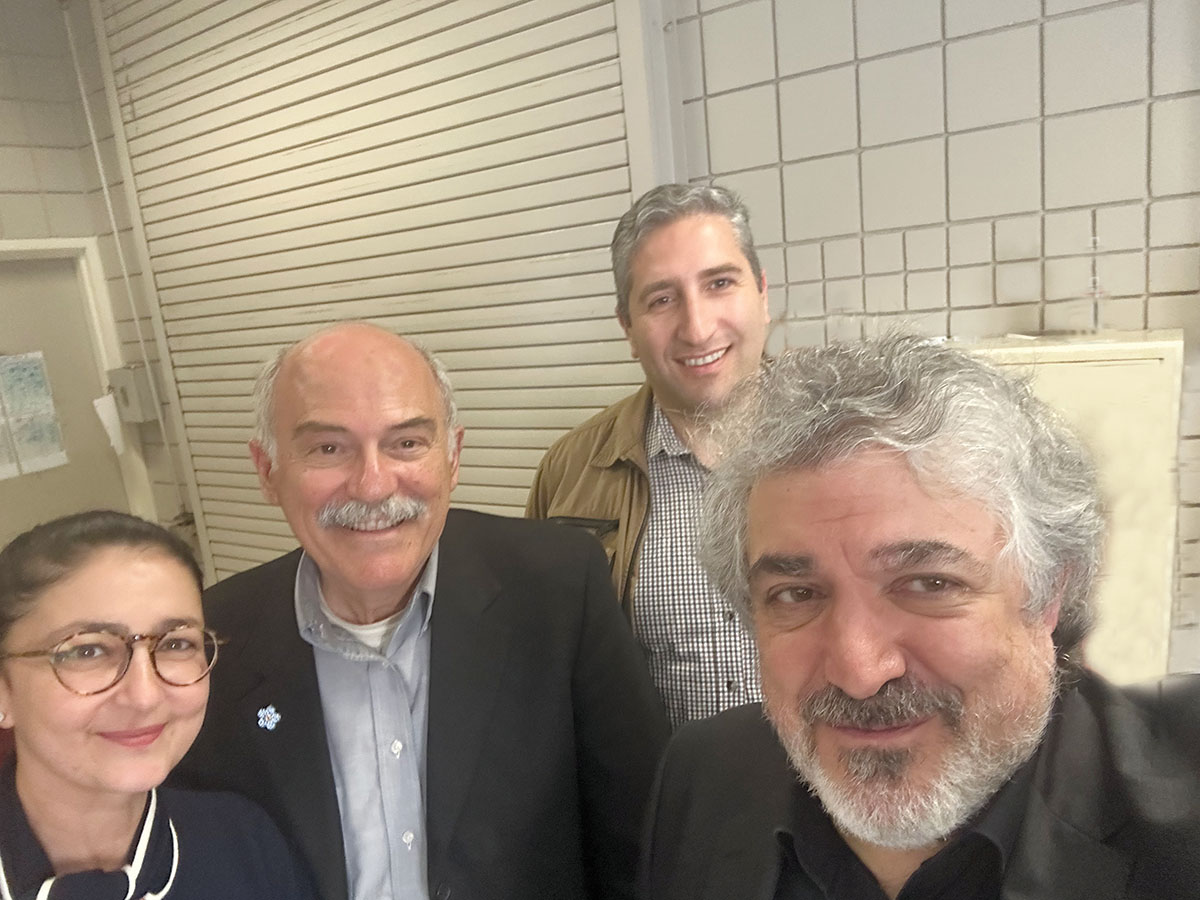
On Sunday, April 26, 2026, a large audience gathered for an afternoon of music featuring the internationally acclaimed pianist Sergei Babayan. The concert was part of the Philip Lorenz International Keyboard Concerts, and co-sponsored by the Fresno State Armenian Stu-dies Program, the Thomas A. Kooyumjian Family Foundation, the Helen Zevart Peterson Memorial Fund, and the Ralph Shabazian Memorial Fund. The concert offered an extensive and emotionally layered program that bridged Western classical traditions and Armenian musical heritage.
Babayan, born into a musical family in Armenia during the Soviet era, brought not only technical skills, but also a sense of history and identity to the stage. Trained by renowned teachers such as Lev Naumov and Vera Gornostayeva at the Moscow Conservatory, and later gaining international recognition through wins at major competitions, Babayan has established himself as one of the most expressive pianists of his generation. Now based in New York City, he continues to mesmerize audiences worldwide with his work.
The evening’s program featured works by composers including Franz Schubert, Sergei Rachmaninoff, and Jesús Guridi, showcasing Babayan’s versatility across different musical styles and periods. However, a particularly meaningful aspect of the concert was the inclusion of Armenian compositions, which resonated with the audience and reflected the cultural significance of the event’s sponsorship.
Among these were several works by Komitas, whose music remains foundational to Armenian identity. Pieces such as “Lullaby,” “Chinar es,” “Shushiki” from Seven Dances, and “Semplice” from Seven Songs were performed with emotion. Babayan also brought to life “Choral” from Six Pictures by Arno Babajanyan, as well as “Song Without Words” by Georgy Saradjian. These pieces showcased the emotional depth and richness of Armenian musical traditions, combining folk in-spired melodies with classical forms.
Throughout the performance, Babayan’s connection to the music was unmistakable. There were moments when he appeared completely absorbed, closing his eyes as if he was transported into the sound it-self. His emotions matched the intensity of his playing, creating a powerful visual and auditory experience. The program moved between moods, from lively and technically demanding pieces to slow, thoughtful pieces that carried an emotional weight.
The concert concluded with a shift in tone, an energetic performance of “Oh Lady, Be Good!” by George Gershwin, transcribed by Maurice Whitney. This upbeat and playful finale stood in contrast to the more thoughtful works earlier in the program, leaving the audience on a high note and showcasing Babayan’s dynamic range as a performer.
The evening was more than just a concert – it was a cultural and emotional journey. Through his interpretation and heartfelt delivery, Sergei Babayan not only demonstrated his extraordinary talent, but also honored his Armenian heritage, creating a deeply memorable experience for all in attendance.