
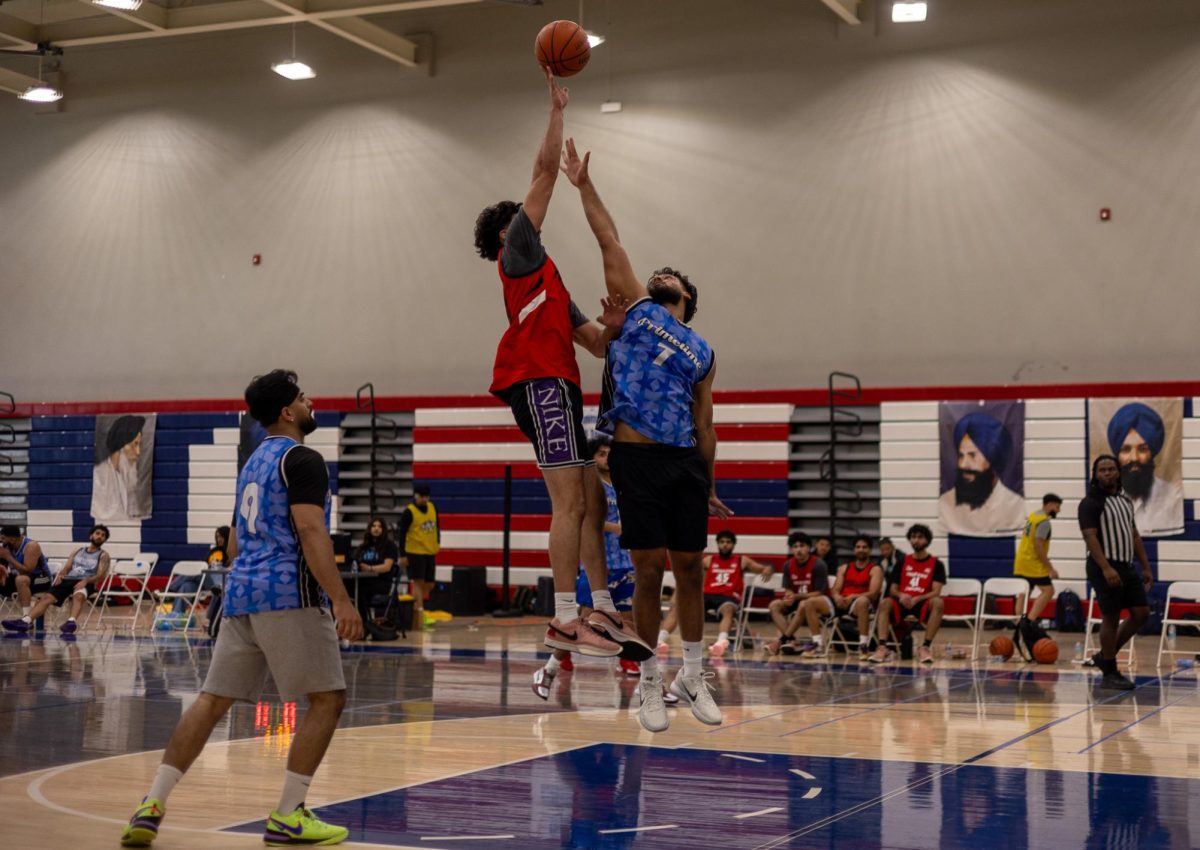
At first glance, the Punjabi Basketball Association (PBA) Olympics, hosted by the Jakara Movement in Fresno, looked like any other basketball tournament. Players ran up and down the court, jump shots fell and crowds reacted to every big play. But for many in attendance, the event was about far more than the final score.
Hosted in Fresno, the PBA Olympics brought together Punjabi athletes from across California for a weekend of competition and community. The tournament took place at Justin Garza High School from April 3-5, drawing teams and supporters from across the Central Valley and beyond. While multiple sports were featured, the basketball courts stood out as a space where identity and athletics came together.
“I play basketball because of the brotherhood,” said Harshdeep Sidhu, a player on Team Fowler. “It’s about having each other’s backs every day and building a legacy that lasts beyond us.”
For many in the Punjabi community, events like this are not always guaranteed. Spaces where culture and sport intersect in a meaningful way can be limited, making tournaments like the PBA Olympics especially significant. They offer more than the competition; they create an environment where people can exist fully as both athletes and members of their cultural community without having to separate the two.
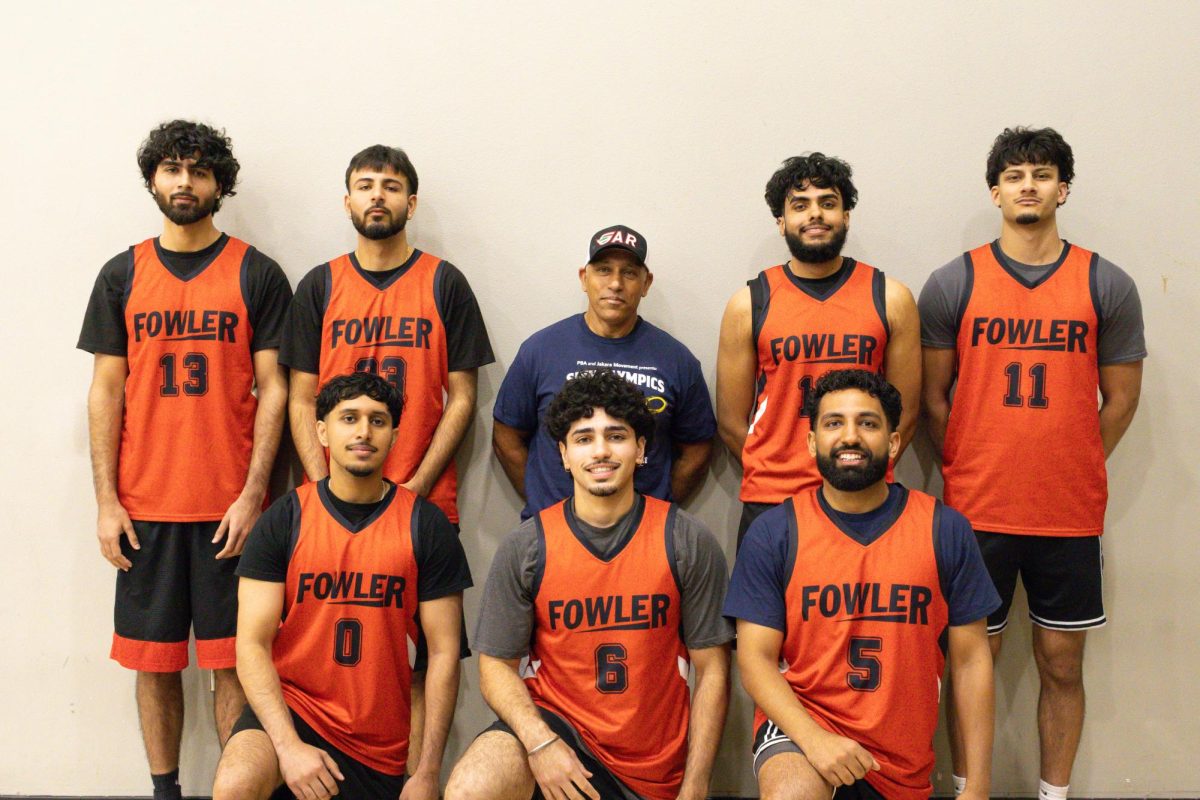
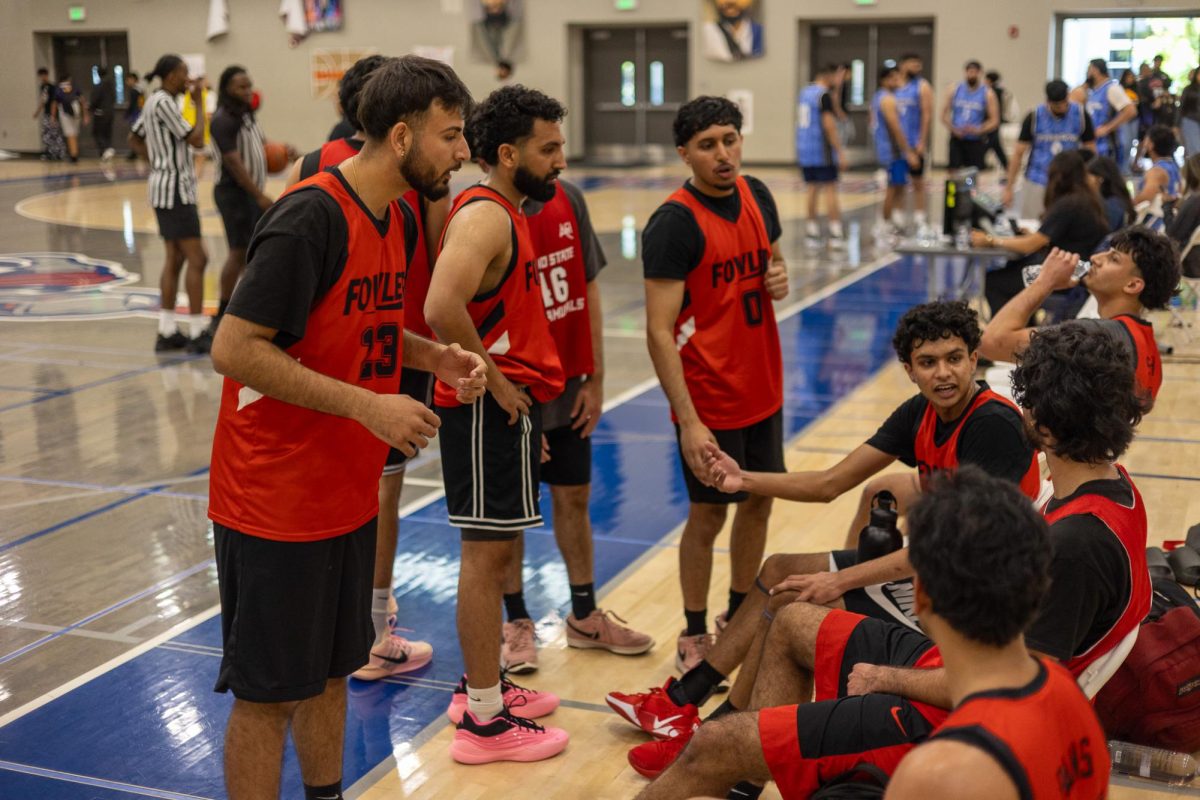
Among the teams competing was Team Fowler, a group made up almost entirely of Fresno State students and alumni. For them, the chemistry on the court didn’t come from just practice; it came from years of growing up together.
The team has played alongside one another since they were young, building connections that now carry into organized tournaments like the PBA Olympics. That familiarity shows in how they play, but more importantly, in how they support each other.
That sense of continuity, from childhood to college to community tournaments, is what makes teams like Fowler stand out. But as meaningful as their story is, it reflects something even bigger happening across the event.
For many players, basketball in this setting becomes more than just a sport. It becomes a way to represent culture and connect with others who share similar experiences, regardless of which team they play for.
“Basketball means more when it’s tied to culture, because it becomes bigger than the game,” said Gurvir Dhillon, who competed on a different team in the tournament. “It turns into a way people represent where they come from and connect with others who share that experience.”
That connection extends beyond the players on the court. In the stands, the atmosphere feels different from a typical tournament. The crowd isn’t just watching, they’re invested.
“We come out to watch, but it’s deeper than that,” said Abhayjit Singh, a spectator. “You know the players, you grew up with them, so it feels personal. It’s like watching your brothers hoop, not just some random teams.”
Even those not playing still feel like they are part of something larger.
“I’m not even playing, but it still feels like I’m part of it,” said Jaden Dhaliwa, a spectator. “Like that’s my guy out there. Everybody is supporting each other, it’s more like a brotherhood than just a game.”
That sense of belonging is not accidental. It is built through intentional spaces like the PBA Olympics, where culture is at the center. From the players on the court to the families in the stands, the event creates a shared environment where identity is recognized and celebrated rather than overlooked.
For parents, the importance goes beyond competition. It is about creating a space where their children feel seen.
“I just want my kid to feel comfortable,” said Tejveer Rai, a parent of a player. “Playing with people who get where they come from, it makes a difference. They’re still learning the game, but they’re also just being themselves.”
Navdeep Gill, another parent of a player, echoed that sentiment. He emphasized the long-term impact these spaces can have.
“As a parent, seeing kids and young adults play in Punjabi leagues means more than just playing a sport,” Gill said. “It’s about being around people who understand our culture, our values and making sure they grow up with that sense of identity.”
For many in attendance, that sense of identity is what makes the event matter. It is not just about representation, but about having physical spaces where the community can gather, compete and be visible.
As the games continued throughout the weekend, the energy in the gym never faded. Each possession, each cheer and each conversation in the stands reflected something deeper than competition.
In events like the PBA Olympics, basketball becomes a bridge between generations, between cultures and between communities. For teams like Fowler, it is a chance to compete. For everyone else, it is a reminder that spaces like this do not just happen, they are built, protected and carried forward by the community itself.