

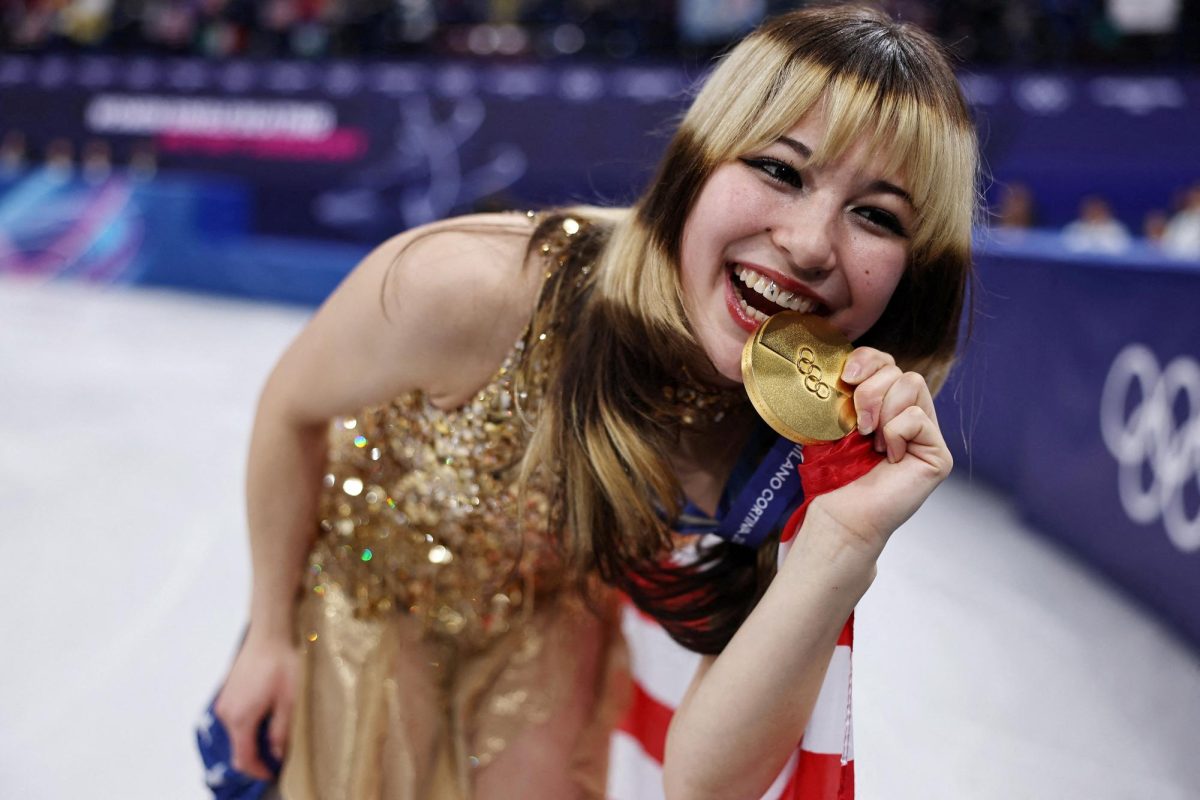
The 2026 Winter Olympics have been an undeniably groundbreaking one, especially for the United States, in many more ways than one.
There were notable injuries in elite athletes, like skiers Lindsay Vonn, Jessie Diggins and Lauren Macuga and snowboarder Chloe Kim. There was lots of political discourse after figure skater Amber Glenn, skier Hunter Hess and Kim expressed discomfort in representing our country in its current political climate, with many speaking out against the Trump administration.
What’s been especially significant so far is the wins — especially in the women’s division.
Our women’s ice hockey team took home gold for the third time ever, where 22-year-old hockey player Laila Edwards became the first Black American woman to win a gold medal in women’s hockey.
Team USA’s women’s figure skating 24-year gold medal drought was brought to an end by none other than 20-year-old Alysa Liu.
The Clovis-born Olympian has held my gaze from the start. After watching her short program, I fell into an hours-long deep-dive on her story.
And I think she also grabbed the heart of anyone like me, who’s had to draw the line and choose between their mental health and the sport they love.
I mean, most people who play sports in adolescence pass the torch at one point or another. Approximately only 6 out of every 100 high school athletes go on to participate in college. But as someone who participated in what is called the “athletic arts,” I would argue that it is in a league of its own regarding mental health.
Figure skating in particular is rigorous and unique in terms of mental health challenges — strict weight requirements and perceptions, the expectation of perfectionism and the hot seat of a podium box sit just at the tip of the ice.
These are all reasons that contributed to Liu’s own announcement of her retirement from figure skating at the age of just 16. Many still wondered why, blinded by her potential and in denial of her affliction.
So, following her sixth-place finish at the 2022 Winter Olympics and winning bronze at the 2022 world championships, she quit the sport she had dedicated all those years to because, at that point, she was essentially trauma-blocking her entire life out.
“All my memories from back then are gone,” Liu said in an interview with ELLE. “I didn’t enjoy skating back then because I didn’t make my own programs, I didn’t design my own dresses — I was just following orders.”
This is why when Liu chose to come back to skating, she told her coach she would only do it of her own volition with specific conditions: She would be calling the shots.
“I get to pick my own program music,” Liu said in a 60 Minutes interview. “I get to help with the creative process of the program. If I feel like I’m skating too much, I’ll back down. If I feel like I’m not skating enough, I’ll ramp it up. No one’s going to starve me. Tell me what I can and can’t eat.”
In watching Liu’s programs, you can see what won her the gold. Although she is extremely technically skilled, it’s her pure joy for the sport that makes her so captivating and special on the ice.
You don’t see many figure skaters smile the way she does when she performs. Her radiance wouldn’t be possible if she hadn’t taken a step back and put herself first.
“I just add skating into my life,” Liu said to The Players’ Tribune. “But skating isn’t my life, like it was before.”
I hope Liu’s success shows young athletes everywhere to prioritize their mental health proactively, and that it’s okay to take breaks and come back on your own terms.
We don’t need to abuse athletes to win gold medals.