


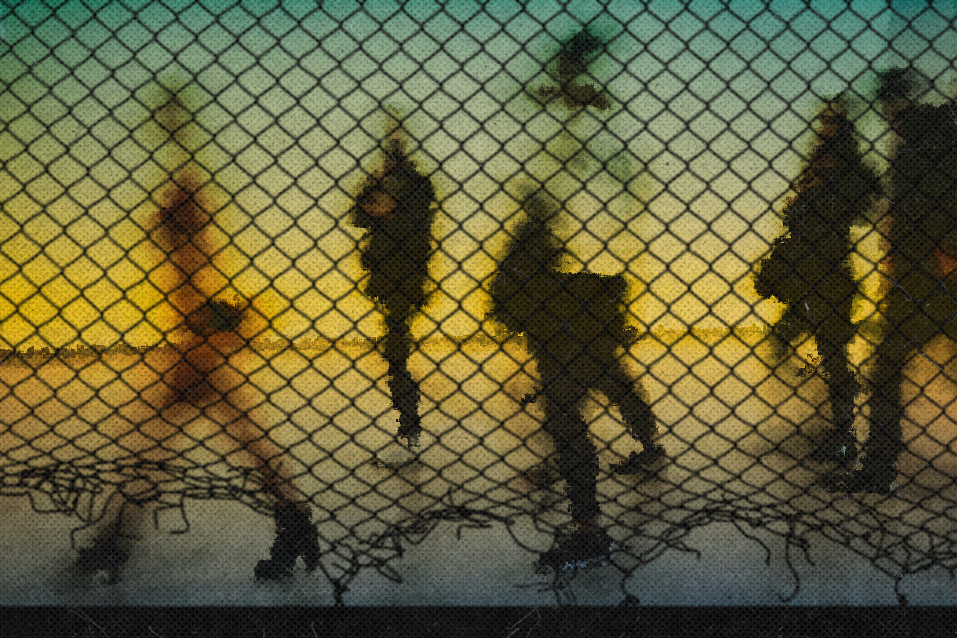
Circling Fences by August Wilson: Tracing the Contours of Love and Loss
“Some people build fences to keep people out… and other people build fences to keep people in.” You could have shared this wisdom with me when I needed to understand it the most, and I would not have gotten the message. In the sterile haze of fluorescent lights and strategically long corridors, I found myself facing a reality I could barely comprehend. I was twelve years old, standing in front of the heavy white door of the visitors’ room of Valley State Prison in Chowchilla, CA. My young mind was burdened with realities that divided me from my mother. Her drug use, her toxic romantic trysts that kept us from ever forming ourselves into a stable family, and her lack of accountability for any of it. I was not unaware of these facts; I just wanted to believe that they weren’t always going to be relevant. I was the oldest of five, simply wanting the love I felt when my mom hugged me to last forever. I wanted my mom to grow up and face the reality I was becoming too aware to ignore. I was a child that wanted their mom to finally be okay, to just be okay. All of it had spiraled into this moment.
My hands tucked into the sleeves of my blue oversized hoodie, creating a barrier between my ability to grab, to feel anything around me. My own body trying to recoil from the moment and the reality of having to see my mom for what she had done and maybe, who she truly was. This was the first of many visits to come, never getting any easier and always painted with a sense of confusion, anger, and overwhelming sadness.
My mother, with her heart of gold and mind of opiates, now sat behind bars, her laughter silenced, her warmth replaced by the cold embrace of concrete walls. I struggled to reconcile the woman I knew with the image of a criminal, branded by society’s judgment and shackled by the weight of her mistakes. I was so angry with her and would yell so many things to myself about how unacceptable her behavior was, but then I would always melt when I saw her. She would look at me with the eyes we share, and it felt like no one but her could truly see me. How could the person who tucked me in at night, who kissed away my tears, be capable of such wrongdoing? The glass between us felt thicker than the steel gates we had to pass through to get into the prison. The lack of makeup on my mom’s face let me see every single detail that she would have usually hid in such high-pressure situations. I could see the worry lines more clearly, the bags under her eyes from being restless, all of it there for me to see and for her to show. I always thought she looked so beautiful without makeup, and no amount of prison stress or orange jumpsuits could change that. For years, I built a wall in front of the memories of those visits deep within the recesses of my mind, unable to confront the pain and shame that made me feel like a confused twelve-year-old all over again. This pattern kept me safe from that feeling throughout my years, until I embarked on my college journey, and a remarkable play showed up in one of my classes. Almost right away, “Fences” by August Wilson captivated me with the story of Troy Maxson, a man whose struggles mirrored my mother’s in so many ways. Like Troy, my mother had built fences around herself, shielding her heart from the pain of a world that had betrayed her. Her fences were the drugs and all the selfish decisions she had made in her life up to that point. Like Troy, she had made choices that led to consequences beyond her control. Troy was a complex, flawed human being, capable of both great love and great harm, and so was my mother.
The more I read, the more I found myself unraveling the tangled threads of my own story. I would get caught up in what I started to call ‘circle sessions’ that entailed me circling multiple lines of the play throughout my readings, using these circled moments as a way of tracing the contours of my mother’s journey with newfound clarity and understanding. The circles I etched around those lines became fences of their own, not just marks on a page but barriers—tall,
thorned, and unyielding. They caged the fury I dared not voice and the sorrow I could no longer contain, keeping them in, keeping me out. Each curve of ink was an act of defiance, an attempt to control the chaos she handed me, whether knowingly or not.
And yet, my hands trembled with something softer as I circled the words on the pages, something closer to forgiveness. The boundaries I created weren’t just prisons—they were pathways, guiding me through the tangled web of her pain and my resentment. I hated her for the weight she left on my shoulders, for the way her struggles spilled into my own life like a flood I couldn’t stop. But I loved her despite it all, and maybe these circles were a way to reconcile those contradictions, to find some peace in the middle of the storm. Each fence I drew acknowledged her humanity among her faults. They weren’t meant to shut her out entirely, only to give me space to feel, to process, to understand. I’m not sure if I forgive her fully—maybe that’s a circle I haven’t drawn yet—but I know the act of enclosing those emotions, of seeing them as separate from myself, was the first step toward release.
My mother is the second-born of four children. She was told her father was the same as the firstborn, but later the truth came out that she was conceived when her mother cheated one night after meeting a stranger at a bar. The father of the firstborn left, and my mother never got to meet her real father. My mother’s mom remarried and had two more children. My mom had to grow up watching her younger siblings have a father figure, someone to be the father that she never had. I started to think deeply about how this could impact my life and the way I would cope or manage these issues. Through the prism of “Fences,” I began to see my mother not as a villain in my story, but as a deeply troubled protagonist in her own story. She was just a woman fighting against the odds, striving to carve out a place for herself in a world that often seemed unfair to her for no reason, with no one that understood her pain but her.
I circled a quote in Fences one night, “I know I got to eat. But I got to live too. I need something that gonna help me to get out of the bed in the morning.” It kept my eyes glued to it as it felt like it captured will to survive and continue amongst turmoil. Just as Troy grappled with the need for sustenance alongside the desire for a meaningful existence, my mother navigated a struggle that wasn’t at all dissimilar, seeking solace while onbarking her own heartbreaking journey. My mother was not just diving into romantic trysts; she was trying to find the love that had left her so lonely as a little girl. Love has the power to heal all wounds, and my mother was constantly searching for that sweet elixir. Like Troy, she was a survivor, driven by a deep longing for more than mere existence. She had a yearning for a life that transcended the confines of circumstance and adversity.
I would circle moments that spoke to me and then go back and try to reflect solely on those moments. “I ain’t got time for that. He’s alive. He’s healthy. He’s got to make his own way. I made mine. Ain’t nobody gonna hold his hand when he get out there in that world.” These words felt like they were highlighted on the page, resonating with the essence of survival amidst adversity. Reflecting on my mother’s journey, I realized that despite her struggles and setbacks, she was driven by steadfast determination to navigate life’s challenges on her own terms. This line also showed me that while she was selfish in her choices, she wasn’t entirely a selfish person. She could have held onto the notion that life took a parent away from her and she had to make do, so therefore we should too, but she did not. Even when she was high on drugs, she was never intentionally neglectful. She might have sold things we needed just to be strung out more times than I can remember, but she would also use that money to take us to rent movies and buy Taco Bell on the way home. I never felt like the high was her endgame. I always felt like happiness was.
My mother grew up with a void from being cast aside and never let me feel like I was being cast aside. Through all my pain and struggles of trying to understand why she was doing what she was doing, even before Fences, I always trusted that she loved me and wanted to be a good mom. One session of circling resulted in coming across one line in particular. “When the sins of our fathers visit us, we do not have to play host. We can banish them with forgiveness… As has been banished for me” These words jumped off the page and resonated deeply with me, as they capture the essence of letting go of the burdens of the past to pave the way for a brighter future. Just as I’ve come to understand my mother’s struggles and complexities through the lens of “Fences,” I’ve also come to realize the power of forgiveness in breaking free from the chains of resentment and pain.
As I look back on those visits to the jail from the vantage point of adulthood, I am grateful for the journey that led me to “Fences.” I am learning that it’s okay not to be perfect, that we have to take the “crookeds with the straights.” In these pages, I found a roadmap for healing and understanding. My mom might not have been perfect, but she never made me feel like she didn’t love me, and because of that, “I’m doing the best I can.” And though the scars of the past may never fully heal, I take comfort in knowing that, like the characters in “Fences,” we are all capable of tearing down the barriers that divide us. We are all capable of building bridges of empathy and forgiveness.
Author Bio: Steven Sandage, graduating with a Creative Writing degree, will pursue graduate studies at Fresno State focusing on American Folklore and storytelling, with a particular emphasis on the narratives of his newly discovered Apache heritage. With 13 publications, his passion lies in exploring the power of narrative. His intended career research will analyze ancestral roots and mythic tropes, including those from his Apache lineage, building a bridge for advanced studies in folklore and its impact on American identity.
Recollections: Of Being is a literary column brought to you by The Collegian, founded and organized by Aura Peredia. We publish writing and art, either political or personal, to create a bridge between varying valley voices.
For previous installments of Recollections: Of Being, click here.