


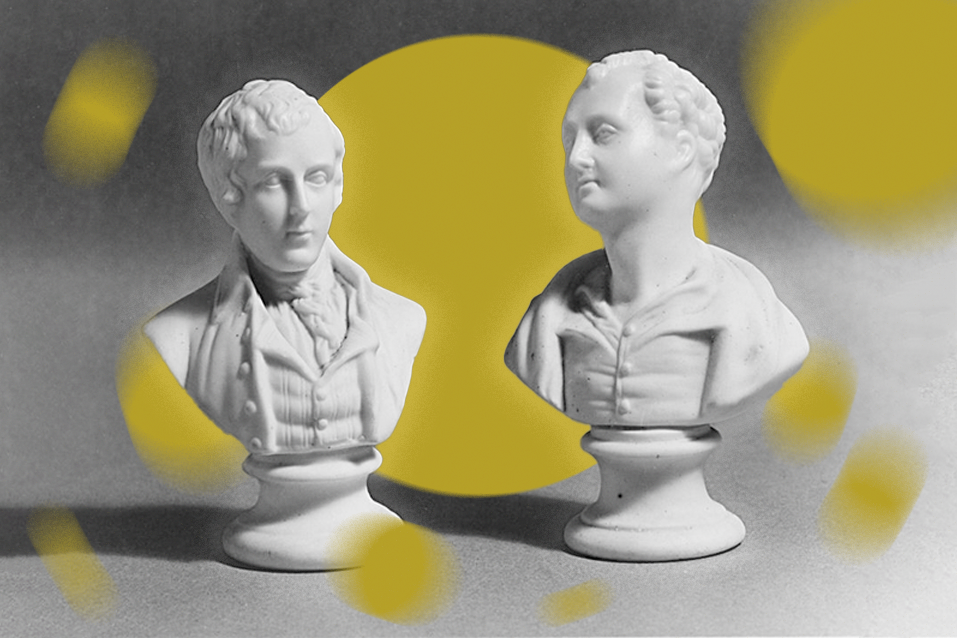
Lord Byron and the Death of Heat: An Ecocritical Reading of ‘Darkness’
Lord Byron’s apocalyptic dream about the sun extinguishing in his 1816 poem “Darkness” has truth in reality because, in five to seven billion years, our sun will begin to die and lose its light as it expands and swallows the planet it feeds. The Anthropocene postulates humanity’s significant role in the impact of Earth’s climate and ecosystems, changing and shaping them as humanity dwells in nature, which seems to compete with who or what can end humankind first. The speaker in the poem envisions desolation as humanity does everything it can to survive its circumstances after the sun’s disappearance. A world without light is all that is left as the speaker recounts his vision of the devastation of nature as the consumption of resources for light becomes the priority. War pauses—light the new commodity—famine ensues, and then war resumes. The iambic pentameter of the poem sets the cadence of the speaker’s anxiety as he describes the apocalyptic event unfolding of stripping all of Earth’s resources until the last two people on Earth look upon each other and die. A catastrophic event can exacerbate and change people’s actions. But, the opening line, “A dream which was not all a dream” (Byron Line 1), keeps an ambiguous notion alive of whether his observations are a dream or a mixture of his reality. The confusion can heighten the importance of observing the agency of nature in the poem as the speaker personifies nature to show its vitality against the devastation of humanity.
Some readings of “Darkness” speculate that Byron’s reason for writing such an ominous poem is the eruption of Mount Tambora in 1815, as darkness and famine are prevalent in the narrative. However, using Jonathan Bate’s Romantic Ecology, Wordsworth and the Environmental Tradition, and Tim Ingold’s “The Temporality of the Landscape” will illuminate the importance of nature not in the background but in the foreground of romantic period writers to show beyond the historicized aspect and garner a green reading of the importance nature plays in the narrative. This paper argues that human nature and nature are interconnected where the actions of humanity impact the natural world by observing the diction and the form of “Darkness” to translate the speaker’s disquietude of their dream that shows the destruction is not after the fact of the sun losing its light but already happening by humanity in their dwellings in the speaker’s reality, but the connection severs by observing the personification of nature to showcase that humanity relies more on nature than nature on humanity.
Nature and human nature are at the center of the poem, as the speaker exudes anxiety about his purported dream. The interconnection of humanity in nature is better understood by Bate’s work, positing the value of a green reading of the Romantic writers, where nature plays a role in the narrative. Bate writes, “The ‘Romantic ecology’ references the green Earth because it recognizes that neither physically nor psychologically can we live without green things; it proclaims that there is ‘one life’ within us and abroad, that the Earth is a single vast ecosystem which we destabilize at our peril” (40). The people in the poem showcase an array of actions destabilizing the natural world, favoring the economy of humans gaining resources for survival. Bate’s claims revolve around another Romantic poet, William Wordsworth, but Andrew J. Hubbell argues that Byron should also be in the conversation about nature poets in his article “Byron’s Cultural Ecology,” which depicts how Byron’s travels in Greece heightens his concept of Romantic ecology by the concept of dwelling. Hubbell writes, “Dwelling in rural nature is not a necessary prelude to developing environmentally. Because any environment, not just wilderness, can yield ecological insight, perhaps there are other epistemologies for developing place-identification and imagining the landscape as oikos[environment]” (185). Hubbell is signaling the importance of interconnecting nature and culture as a pair instead of a binary of opposition. Furthermore, Hubbell suggests that dwelling is not a stagnant concept but an adaptable one that moves with the people as they adapt to their locations like in “Darkness.” Connecting both culture and nature demonstrates the connectivity they have with each other. The connection in “Darkness” of both humanity and nature displays the nuance of trying to separate the two because actions have consequences, and both parties are in interplay as they try and survive, with one providing the resources and humanity valuing their economy over nature’s ecology puts tremendous strains on regaining any natural resources.
The connection between nature and humanity changes some of the diction in the poem, as the speaker’s misanthropic words can imply a new way of looking at the dynamics of nature’s transformation from human dwellings to convert it into an environment of bareness. Byron writes, “The world was void, / The populous and the powerful—was a lump, / Seasonless, herbless, treeless, manless, lifeless— / A lump of death—a chaos of hard clay” (69-72). The alliteration with the “less” highlights the emptiness the Earth is experiencing as all matter is evaporated in the chaos of losing light from the extinguished sun, and the succession of the less is also the constant striping of the Earth’s resources over time. The strong caesuras force pauses to contemplate how Earth became the way it is with no life. The world is not lifeless or manless on its own, but thanks to losing its light, humanity’s actions exacerbate the interaction with nature, leaving the Earth in further devastation. The agency of humanity to gain resources overtakes the economy of nature, which devastates the landscape to pursue its needs. The diction that Byron uses indicates what takes precedence in the environment. Byron writes, “And they did live by watch fires –and the thrones, / The palaces of crowned kings—the huts, / The habitations of all things which dwell, / Were burnt for beacons; cities consumed” (10-13). In descending order, the speaker mentions how society ranks its hierarchy, starting with the monarchy and moving on to all things that dwell. The monarchy has more resources to burn, as this passage begins with the thrones. The dashes link kings to those who live in huts as both devastate the land they cultivate in the end, while they ignore and burn everything that can provide a dwelling, meaning humanity values their needs above all else.
Dwelling becomes important as humans’ agency supersedes nature’s agency. Bate points out the false binary of culture and nature in discussing the British Romantic writers’ ecology, and synergizing Bate’s work with anthropologist Tim Ingold’s article can continue the importance of the dwellings in nature in the poem as the places humans inhabit transform nature to bareness. Ingold discusses the dwelling perspective to signal the connections between those who dwell in the land and transform it into a landscape as the inhabitants and the land become parties that cultivate a landscape. Ingold writes, “But the forms of the landscape are not pre-prepared for people to live in—not by nature nor by human hands—for it is in the process of dwelling that these forms are constituted…Thus, the landscape is always in the nature of ‘work in progress’” (162). The land is not prepared for people in isolation, and the process of the inhabitants and the land constantly shapes it and transforms it into the landscape. If the process is continual, then the temporal element of the landscape depends on the dwelling perspective as the cultivation of it changes within those who inhabit it in time and space. The poem’s landscape temporality shows how it is after the sun’s disappearance as a dire place where humanity is scavenging for resources. However, the dwelling perspective is a reminder that the people are still participants of the same land prior to the disappearance of the sun, but the meaning of the landscape changes as the circumstances change. The change in circumstances after the catastrophe does not signal the shift away from valuing the economy of nature over the economy of humans; instead, it asks to observe the temporal aspect of the land with the inhabitants as resources are always needed, which shapes the landscape to suit those dwelling who have more authority in the changes taking place.
The dwelling perspective indicates the temporal aspect of the changing landscape due to humanity and the taskscape, which is closely related to the dwelling perspective and showcases the agency the natural world has in its own transformation. The term taskscape by Ingold posits nature as dynamic and plays a role in the transformation of the land to a landscape as tasks by humans and tasks or actions by nature change the topography. Ingold writes, “In other words the taskscape exists not just as activity but interactivity” (163). The activity for Ingold is a web of connections of tasks by humanity that use the actions of nature, such as trees, rain, and even the day/night cycle, to construct a landscape of dwelling. However, the speaker shows the agency of humanity in the transformation having a more significant impact as the natural transformation of growth and change of the Earth with things like trees growing that take more time. Byron writes, “Forests were set on fire—but hour by hour / they fell and faded –and the crackling trunks / extinguish’d with a crash—and all was black” (19-21). The forests represent the natural world taken over by humankind in their plight to survive the inevitable as the agency of humans is cultivating the landscape faster than the land can respond or recuperate. The speaker’s anxiousness expressed by the enjambed lines mirrors the frenzy of getting recourses, leading to a full pause to acknowledge the scope of devastating the environment as it lacks the capacity to resupply itself for human needs. Bate mentions the psychological impact of over-destruction, “If we destroy all trees, we will irremediably disrupt not only the economy of nature but also our own social and psychological economy” (57). The psychological factor of the devastation of the environment happens relatively quickly in the vision after the forests are gone, “Some lay down / and hid their eyes and wept, and some did rest / Their chins upon their clenched hands, and smiled” (Byron 23-25). Some accept their circumstances and rest, while others become stagnant and still like trees, and their reaction to the devastation and loss of light is madness, with no other reason to smile at the darkness.
The interconnectivity of the environment with the natural world and humanity is challenging to separate in the perturbed vision the speaker presents, which mainly involves dire situations with each mention of people and the natural world’s incongruous relationship. However, there is a part where the symbiosis of humanity and nature is positive in the poem. Byron writes, “Happy were those who dwelt within the eye / Of the volcanos, and their mountain-torch (16-17). The kenning of the mountain and torch shows the positive connection between nature and humans, as the volcano’s illuminance stops the chaos from scavenging the land for other sources to generate light. Connection to nature alleviates the pressure from the chaotic action of using all the energy to plummet and ravage the environment. The ephemeral happy coexistence is a shift from the devastation of the environment, and that shift recalls the dwelling perspective and the taskscape of the land as the dangerous proximity of a volcano now becomes an ideal location that garners the safety of the light as the task of humans to find a light source and the volcano’s task of producing light make it an ideal dwelling. Therefore, the dwelling perspective and taskscape allow a new reading of the speaker’s anxiety that mentions both the humanity and nature aspects, which will notice the agency of nature through the personification of it the speaker uses as they describe the dream.
Some discourses of “Darkness” posit the apocalyptic world the speaker presents and ignore the agency nature plays in the poem’s diction. The article “Pandemics, Social Disruption, and Dark Skies” by William Hughes suggests an excellent reading of “Darkness” with other titles, such as the apocalyptic World War Z, to illustrate the omen of darkness in nature that makes humanity abandon itself with no way to return to stasis before the apocalyptic event. Hughes writes, “Fictions such as these tend to advance the bleak possibility that the absence of culture and atomization of society will most likely lead to further deterioration of both the social and natural environment” (22). Hughes suggests that a work like “Darkness” is more representative of the term eco-gothic since the deterioration of culture is tethered to nature. Similarly, the article “Byron’s Dark Side: Human and Natural Catastrophe in Don Juan and ‘Darkness’” by Alexander Regier situates the term catastrophe to expand the meaning of Byron’s work and showcase the catastrophic reading to show the no return of optimism or stasis that ecocriticism entails with a reading of Romanticism. Regier writes, “Byron does not just invite us, he forces us to try and imagine through poetic form a darkness that goes, or lies beyond the social or the aesthetic…it urges us to conceive of the possibility of total annihilation, a scenario that goes beyond the apocalyptic since there is no saving force” (40). Both authors make valid points in their arguments to indicate the lack of optimistic aspects of the poem with no return to stasis or an optimistic view of humanity. However, the agency of nature that the taskscape suggests makes the poem’s ending different when the ecocritical lens considers the economy of nature and sees that the natural world changes and evolves to show a separation of nature and culture that leads to stasis for nature.
The poem’s closing ends in darkness, and on a surface reading, the ending entails the death of nature.
The Waves were dead; the tides were in their grave,
The moon, their mistress, had expired before;
The winds were wither’d in the stagnant air,
And the clouds perish’d; Darkness had no need
Of aid from them—She was the universe. (Byron 77-82).
The personification of nature showing its death after the perishing of humanity can suggest that nature dies with culture. However, the same personification validates the idea that nature has agency. The waves dying link the concept of the moon’s role in the creation of the tides, which implies how the land can change and transform by itself with the concept of the taskcape as humanity uses natural phenomena to dwell. The mimicking of the death of nature and human nature shows the connections they have, but it is clear that one is fine without the other. Translating the personification of nature as darkness in the ending can imply that nature is shutting its eyes to humanity as a reminder that nature does not need humanity to live. The sun is part of the natural world, and its disappearing impacts all life on Earth, both nature and humans, yet darkness is also part of the natural. It will continue despite humanity perishing. A recall to a past line in the poem, “A lump of death—a chaos of hard clay” (Byron 72), can also indicate a new beginning, a protoearth in its early stage of evolution before humanity’s role in its death; a return to stasis.
Lord Byron’s “Darkness” is ostensibly a dire poem as the speaker’s anxious tone visualizes the desecration of the planet. However, the liminal space Byron creates with the opening line of the speaker describing a dream and not all a dream makes the notion of seeing the speaker’s words of the apocalyptic vision already happening in their reality. Bate’s assertion of viewing nature in the foreground of Romantic period writers lends the reading of the speaker’s words to translate nature’s supposed stagnation to a dynamic one that plays a role in the survival of humanity. Ingold’s dwelling perspective and taskscapes illuminate humanity and the land’s role in generating a landscape. Both Bate and Ingold showcase the connectivity of nature and people as both have their roles in creating the environment. In the poem, the landscape changes, and the dwellings shift as humanity moves and rearranges its surroundings to fight off extinction. The sun’s death is a catastrophic event, which can exacerbate the madness of burning all the surroundings for light, but resources were also needed before its disappearance. The connection humans and nature have is one that is hard to separate, but if there is a separation, it is that humanity needs nature to survive, but nature does not need humankind to continue.
Works Cited
Bate, Jonathan. Romantic Ecology (Routledge Revivals) : Wordsworth and the Environmental Tradition, Taylor & Francis Group, 2013. ProQuest Ebook Central,
https://ebookcentral.proquest.com/lib/csufresno/detail.action?docID=1520952.
Hubbell, J. Andrew. “Byron’s Cultural Ecology.” European Romantic Review, vol. 21, no. 2, Apr. 2010, pp. 183–203. EBSCOhost, https://doi
org.hmlproxy.lib.csufresno.edu/10.1080/10509581003644014.
Hughes, William. “Pandemics, Social Disruption, and Dark Skies: Apocalyptic Fictions and the End of Human Culture.” Critical Quarterly, vol. 62, no. 4, Dec. 2020, pp. 17–23. EBSCOhost, https://doi-org.hmlproxy.lib.csufresno.edu/10.1111/criq.12577.
Ingold, Tim. “The Temporality of the Landscape.” World Archaeology, vol. 25, no. 2, 1993, pp. 152–74. JSTOR, http://www.jstor.org/stable/124811. Accessed 14 Nov. 2024.
Regier, Alexander. “Byron’s Dark Side: Human and Natural Catastrophe in Don Juan and ‘Darkness’.” Byron Journal, vol. 47, no. 1, June 2019, pp. 31+. Gale Academic OneFile, dx.doi.org.hmlproxy.lib.csufresno.edu/10.3828/bj.2019.6. Accessed 16 Nov. 2024.
Author Bio: Freddie Rosas is a first-year graduate student in the M.A. Literature program at CSU, Fresno with future aspirations of teaching at the college level. His academic interests are British Restoration and 18th century and Romantic period literature, and various literary theories, such as intersectionality, postcolonial, and historical narratives that help explore an array of societal injustices. He is currently exploring ecocriticism to bring ways to read literature and showcase the importance of preserving the environment.
Recollections: Of Being is a literary column brought to you by The Collegian, founded and organized by Aura Peredia. We publish writing and art, either political or personal, to create a bridge between varying valley voices.
For previous installments of Recollections: Of Being, click here.